With winter rapidly approaching, the 2010 model year cars that haven't already been released are quickly breaking cover. The 2010 Lexus GS sedan range gets a new technology treatment and the hybrid GS 450h gets a new look, but otherwise they carry over much of what made the 2009 models so good.
Both the 2010 Lexus GS 350 and GS 460 get new iPod and USB connectivity with Bluetooth streaming audio and active front headrests, plus an integrated XM satellite radio receiver with the standard Lexus Premium Sound System. The navigation system has been updated with casual-language voice control and can also now grab your phone's phonebook via Bluetooth. Standard XM NavTraffic/Weather capability is also built in, though it only comes with a 90-day subscription. Safety Connect is also standard on non-navigation equipped vehicles, while the Enform telematics system is added when navigation is equipped.
Power for the standard GS sedans carries forward the 303-horsepower 3.5-liter V-6 in the GS 350 and the 4.6-liter, 342-horsepower V-8 of the GS 460. The GS 450h nearly matches the V-8's output at 340 horsepower from its combination of electric drive and a 3.5-liter V-6 engine, and though it's a hybrid, it actually out-accelerates the V-8 GS 460 by 0.2 seconds to 60 mph (5.2 seconds vs 5.4 seconds).
The Hybrid GS 450h gets all that plus a few more updates, including new 18-inch alloy wheels, a revised grille and clear taillight covers. Blue-colored hybrid badging like other Lexus hybrids also features prominently, making it clear the GS 450h isn't a normal gas-powered luxury sedan.
BMW Motorrad study for urban traffic. BMW C1-E: concept for a higher level of safety in the city.
Munich. This is what a safe, environment-friendly and highly practical single track vehicle for city traffic could look like in the future. BMW Motorrad developed the C1-E study as a contribution to the European safety project eSUM. This study unit is based on the concept of the BMW C1. It is characterized by a very high level of active and passive safety and is driven by an electric motor.
The BMW C1-E provides exemplary protection for its rider. This is ensured by the safety cell with the conspicuous roll-over bar which dynamically spans the rider seat in combination with the energy-absorbing impact element at the nose end. A further special point is that the C1-E rider wears a seat-belt. In the study this safety feature is highlighted by red belts and belt buckles.
Visually the concept vehicle expresses brand typical sheer driving pleasure and clearly distinguishes itself from typical scooter looks. Its lines are dynamically stretched and flow horizontally with a low visual centre of gravity. The fairing with its windscreen, the luggage space behind the rider and the side stand for effortless parking ensure high suitability for everyday riding combined with a high degree of wind and weather protection.
The electric motor employed in the study has been designed for city use and is based on components by the company Vectrix. The motor obtains its power from a lithium-ion battery and thus possesses sufficient power for mastering most inner-city traffic riding with ease. Alternatively the vehicle could also be equipped with an efficient, low-emissions internal combustion engine.
The safety features of the C1-E have been taken from the former BMW C1 and further enhanced. BMW's avant-garde two-wheeler is regarded as a milestone in safety on two wheels. It is the only motorised single-track vehicle to be exempt from mandatory helmet wearing in almost all European countries.
This BMW Motorrad study is to remain the only model of its kind. Series production is currently not planned. Nevertheless, findings from the project will find their way into other future developments in the field of single-track vehicles.
eSUM stands for European Safer Urban Motorcycling. It is a cooperation project between major urban European motorcycling centres and motorcycle manufacturers. The cities currently involved in the project include Paris, Rome, Barcelona and London and the manufacturers are BMW and Piaggio.
The advantage of two-wheeled transportation is that it offers a great opportunity for improving the flow of traffic in urban locations. Moreover, it is environmentally friendly and lends itself to individualisation. However, the vast majority of accidents occur in urban traffic, in areas where 80 percent of the population live. The idea behind eSum is to look into ways of countering this trend. The joint goal is the identification, development, and practical demonstration of measures which are able to guarantee safe motorcycle and motor-scooter transport in the inner-city traffic of the future.
One of BMW Motorrad's major concerns over the last twenty years has been the improvement of motorcycle safety. This was amply demonstrated by the consistent strategy which has led to the Motorrad ABS and continued with its long-term ongoing development. Only a few weeks ago, on August 31, the 1,000,000th BMW motorcycle with Integral ABS, a BMW K 1300 R, left the production line in Berlin-Spandau.
Since 2005, a series of further active safety features have been developed to enhance the safety BMW motorcycles still further: RDC Tyre Pressure Control, ASC Anti-Slip Control, the new Race ABS and the DTC Traction Control incorporated in the new BMW S 1000 RR, not to mention the innovative range of BMW Motorrad rider equipment.
Over and above this, BMW Motorrad is also conducting research into forward-looking rider assistance systems designed to increased road safety, as part of the ConnectedRide project. Features being looked at include cross-traffic and traffic-light assistance as well as a warning system for impending poor weather, road obstacles, an approaching emergency vehicle, or sudden braking manoeuvres.
For more information about eSUM please see: www.esum.eu
GP3 Series is very pleased to announce the names of the ten teams that are now officially entered for seasons 2010, 2011 and 2012. Each team will line up three cars on the grid.
Great Britain will be represented by three teams namely Manor Racing, Hitech and Carlin Motorsport, whilst France will have GP2 Series 2009 Champions ART Grand Prix and Tech 1 Racing entering the championship. In the Series intended to be a stepping-stone into GP2, Spaniard Addax Team will also compete in GP3. Arden in association with Formula One driver Mark Webber will race with an Australian license. German Mücke Motorsport, Irish Status Grand Prix, and Swiss Jenzer Motorsport complete the high-profile entry list.
GP3 Organiser Bruno Michel said: "The entry selection process has been thought off very carefully and we have only selected teams that proved to be most successful in their categories. This was of course a very important step for GP3 and I am very pleased to welcome them. I sincerely believe that we enjoy a strong and extremely competitive line-up.
The philosophy behind GP3 Series is very similar to what we've been doing in GP2 for the past five years in terms of car performance, costs control, show, safety and training to access to the following category, but of course adjusted to the level of this new Series. Our goal is to reveal young drivers able to jump to the next step.
Together with these ten teams and our technical partners Dallara, Renault, Pirelli and Hewland, we will work hard to make the GP3 Series a success and I cannot wait for the inaugural season to start! "
Meanwhile, all summer long, the GP3 Series have been working hard on the development of the car. With a total of nine days of test in Mugello, Le Castellet and Barcelona, first with newly appointed Renault F1 driver Romain Grosjean and then GP2 Series 2009 runner-up Vitaly Petrov at the wheel, the focus remained on reliability and performance. An additional four days will complete the development programme.
The production process will start shortly with three cars delivered to each team in the first weeks of 2010. The first official test session will take place in March 2010, followed by two other sessions before the opening race weekend at the first Formula One European Grand Prix in 2010. The rest of the calendar will follow the Formula One European events excluding Monaco and Istanbul; furthermore, the championship will follow GP2 Series stand alone race.
WASHINGTON, DC--(October 5, 2009) - Arotech Corporation (NASDAQ: ARTX) today unveiled at the Annual Meeting of the association of the US Army (AUSA) its new Light Protected Vehicle -- the Tiger. Based on a commercial off-the-shelf Dodge RAM 5500 platform, the MDT Tiger is a cost effective, highly armored Light Protected All Terrain Vehicle for a crew of 6-9.
The Tiger is mine and blast protected, with various add-on armor options, including reactive armor. Its 5 doors and a roof hatch offer easy loading and unloading of soldiers and equipment. The wide and spacious cabin, with its large payload capacity can be tailored to many missions.
A powerful Cummins 350 HP diesel engine, large wheels, and a 127" wheel base offer exceptional all terrain capabilities. The advanced suspension system ensures a comfortable ride for the crew. The 8.8 ton GVWR allows -- with a standard armor package -- for a 1.5 ton payload, or 6 passengers plus 900 kg of equipment. The add-on armor panels can be removed, repaired, replaced or upgraded. An optional upgrade to a 10.4 ton GVW allows for an improved armor suite, including reactive armor defeating RPG rockets and EFP charges.
The MDT Tiger LPV was designed to be cost effective. The COTS Dodge platform ensures widespread support and cost effective maintenance. The unique encapsulated cabin allows easy access to all components. The capsule can easily be removed and re-mounted, allowing its installation on a new platform, increasing its life and ensuring low life cycle cost.
The spacious cabin, with a flat floor throughout and vertical walls, allows for various seating and equipment mission-dependent arrangements. The front row has three-in-a-row seats for driver, navigator and commander. In the rear, 3, 4 or 5 passengers can ride facing forward. The rear cabin can also accommodate 6 passengers in two side-facing rows. A 2 or 4 liter MedVac option is also available.
Windows on all 4 sides allow for improved situation awareness. Optional gun-ports on all 4 directions allow for accurate small arms operation. A roof mounted remote controlled weapon station, or man-operated turret are optional.
"The Tiger expands our reach into the military vehicle market," said Robert Ehrlich, Arotech's Chairman and CEO. "With the new Tiger, the well established David and the recently announced Gideon, we now offer military armored vehicles ranging from 1.5 to 10.5 tons."
About Arotech's Armor Division
Arotech's Armor Division is an innovative leader in lightweight armoring for vehicles, aircraft and their operators. The Armor Division has years of battlefield and commercial protection experience and has provided life saving protection under the most extreme conditions.
Arotech's Armor Division consists of MDT Armor Corporation (www.mdt-armor.com), M.D.T. Protective Industries, Ltd. (www.mdtisrael.com), and Armour of America (www.aoa-usa.com).
About Arotech Corporation
Arotech Corporation is a leading provider of quality defense and security products for the military, law enforcement and homeland security markets. Arotech provides multimedia interactive simulators/trainers, lightweight armoring and advanced zinc-air and lithium batteries and chargers. Arotech operates through three major business divisions: Armor, Training and Simulation, and Batteries and Power Systems.
Arotech is incorporated in Delaware, with corporate offices in Ann Arbor, Michigan and research, development and production subsidiaries in Alabama, Michigan and Israel.
Except for the historical information herein, the matters discussed in this news release include forward-looking statements, as defined in the Private Securities Litigation Reform Act of 1995, including the effect of any share repurchases by Arotech. Forward-looking statements reflect management's current knowledge, assumptions, judgment and expectations regarding future performance or events. Although management believes that the expectations reflected in such statements are reasonable, readers are cautioned not to place undue reliance on these forward-looking statements, as they are subject to various risks and uncertainties that may cause actual results to vary materially. These risks and uncertainties include, but are not limited to, risks relating to: product and technology development; the uncertainty of the market for Arotech's products; changing economic conditions; delay, cancellation or non-renewal, in whole or in part, of contracts or of purchase orders; dilution resulting from issuances of Arotech's common stock upon conversion or payment of its outstanding convertible debt, which would be increasingly dilutive if and to the extent that the market price of Arotech's stock decreases; and other risk factors detailed in Arotech's most recent Annual Report on Form 10-K for the fiscal year ended December 31, 2008 and other filings with the Securities and Exchange Commission. Arotech assumes no obligation to update the information in this release. Reference to the Company's website above does not constitute incorporation of any of the information thereon into this press release.
Toyota released first details about the Toyota FT-EV II earlier today. The Future Toyota Electric Vehicle II concept is meant to be a daily driver capable of low-level highway speeds.
Running on lithium-ion batteries, the vehicle is capable of taking passengers a distance of 90 kilometers on a single charge. Top speed is 100 km/h, which is just enough to stay in the slow lanes on the freeway.
Auto-pilot functions are meant to go beyond navigation. The FT-EV II can automatically download audio/visual content specifically geared towards the individuals in the car. Once plugged in at home, the vehicle can upload its content to a central computer.
Meanwhile, the vehicle's exterior is very much an evolution on the first FT-EV. This car appears to give more headroom, and more space in the back. A shorter nose means the windshield is flatter, and less angled. The front bumper was also redesigned. No pictures of the new concept's rear were provided.
The manufacturer did not release details about recharge time and motor size. The weight of the FT-EV II was also not released.
Its interior was designed to be "retro-futuristic," which seems like an oxymoran at first. However, taking a look at the provided interior picture, the car looks like something that could have been storyboarded in the late-1970s, or possibly earlier, as a "car of the future." It has no foot pedals or steering wheel. Instead, the vehicle appears to be controlled by two control levers when the car is not on auto-pilot.
Toyota will debut the new Toyota FT-EV II concept at the Tokyo Motor Show at the end of October.
Ferrari is launching a special edition of its 599 GTB Fiorano equipped with the
HGTE (Handling Grand Turismo Evoluzione) package, which will be built in a
highly exclusive run of less than a dozen cars. The special edition models go by
the name ‘599 GTB Fiorano HGTE China Limited Edition’ and were developed
together with Chinese artist Lu Hao.
One of those will be auctioned-off as a unique, one-of-a-kind edition itself,
signed by artist Lu Hao, who has added his artistic touches to the limited
edition series. The bidding will take place at a charity gala auction in Beijing
that Ferrari will be holding on November 3rd.
The models come in a two-tone color scheme, featuring a special Rosso Fuoco red
paint scheme and a grey roof. A special touch added by Hao is an ancient Chinese
script called "Xiao Zhuan" to engrave a name plaque for each edition as well as
mark the car throughout, such as on the engine starter button and the rev
counter.
"The 599 China Limited Edition model is a true masterpiece, combining rich
Chinese artistic heritage with Italian design in a most spectacular way," says
Ferrari Asia Pacific CEO Marco Mattiacci.
Some of the charitable proceeds have been earmarked for Chinese students in the
automotive engineering field.
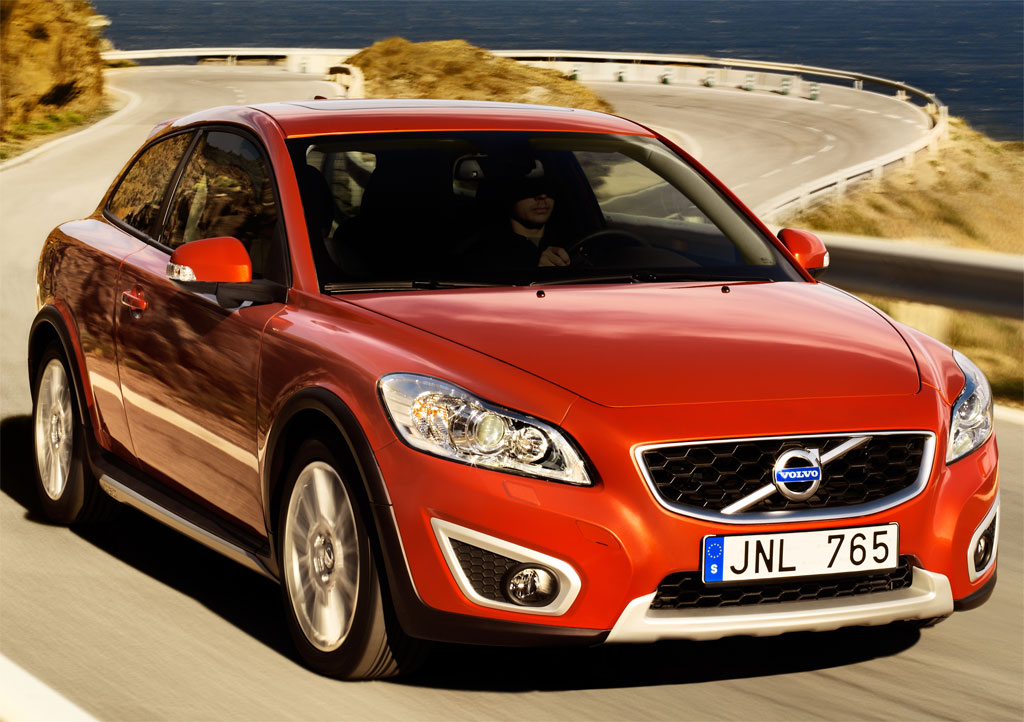
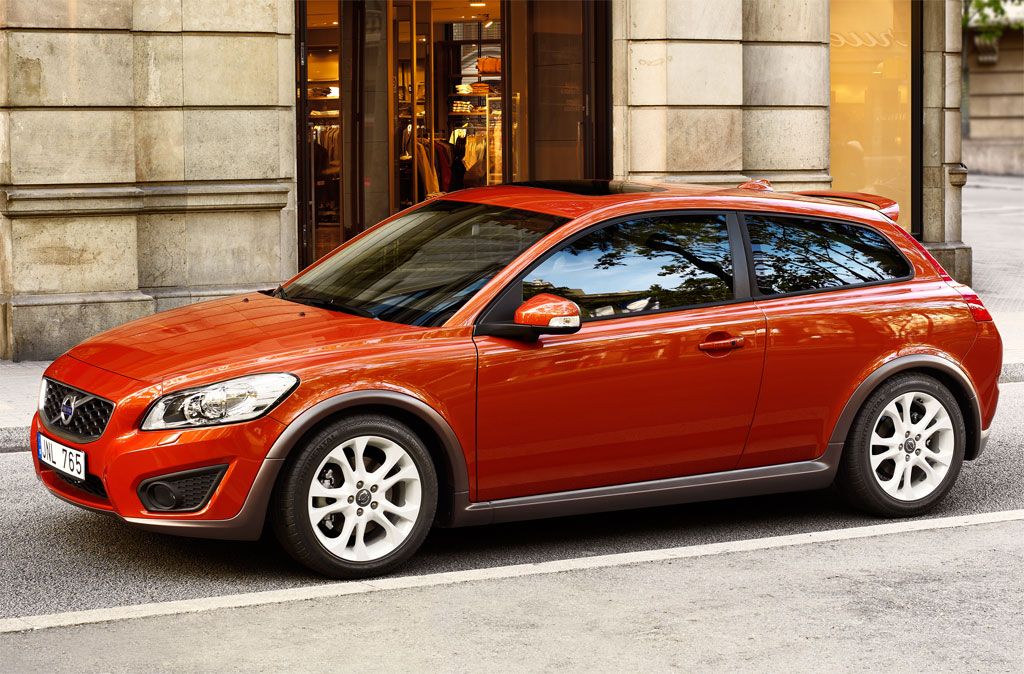
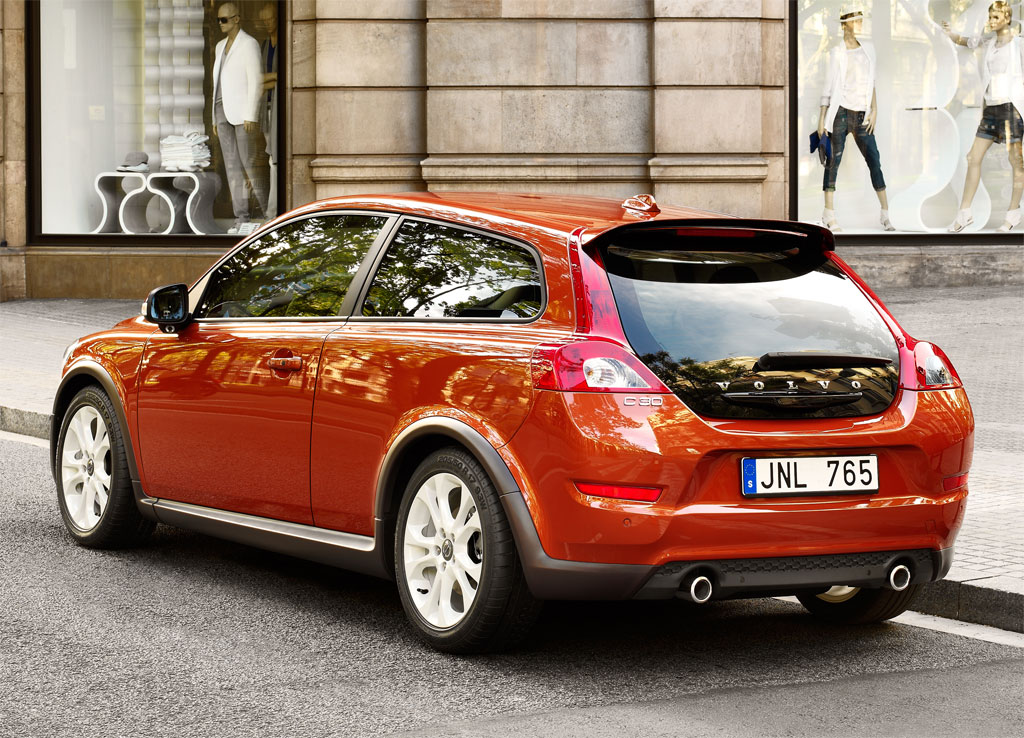
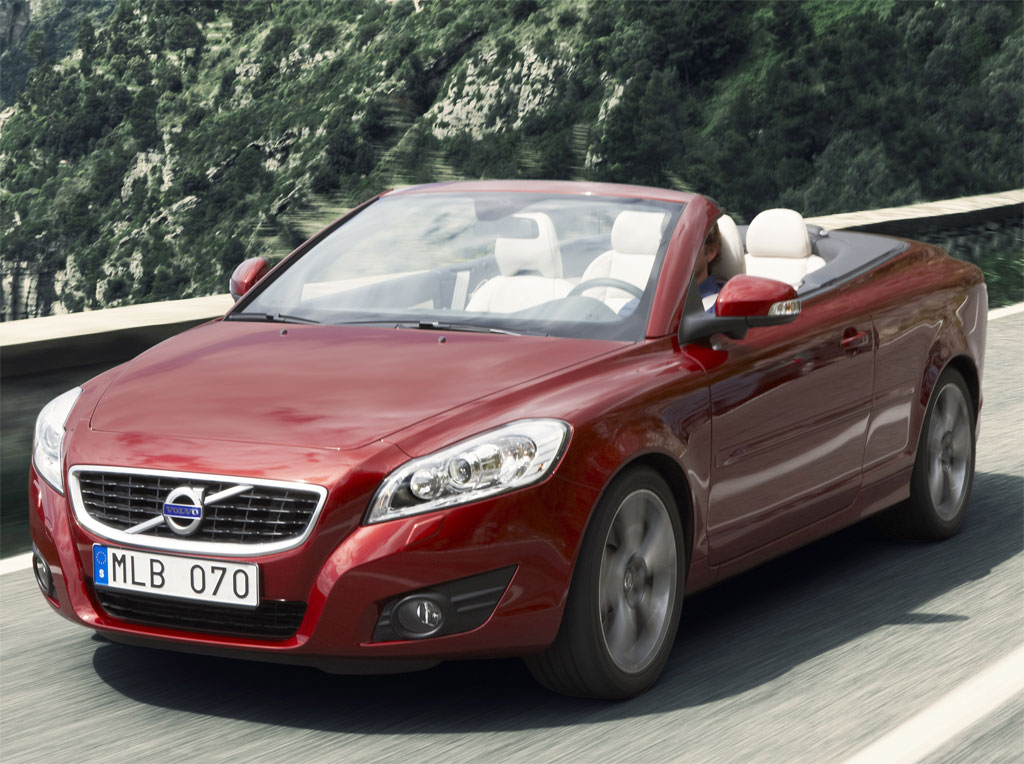
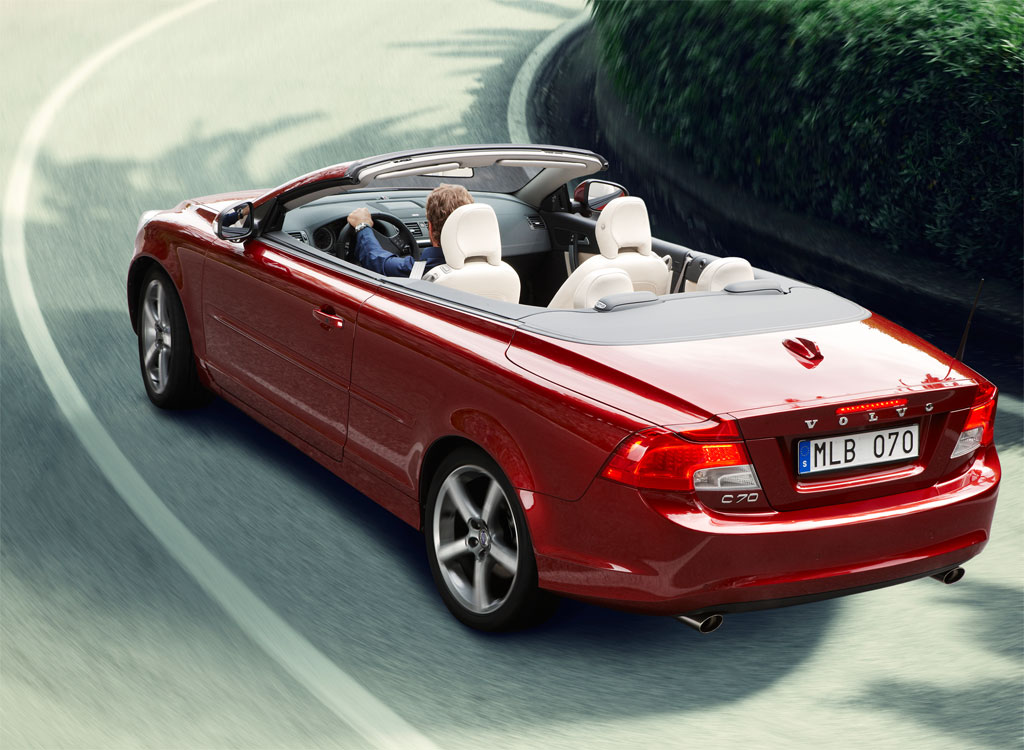
Volvo Car UK has announced prices for the new C30 SportCoupe and C70 coupe/convertible. The Volvo C30 starts from only £14,495 OTR for the 1.6 S, while customers can purchase a new Volvo C70 2.0D S for £25,995 OTR.
The new Volvo C30 and C70 were unveiled at the IAA Frankfurt Motor Show in September 2009 showcasing extensive facelifts to give the cars distinct new styling. Both models will arrive in dealer showrooms and be available for customer test drives this December, with first customer deliveries in January 2010.
Volvo C30 specification and pricing
Starting at £14,495 OTR, the Volvo C30 will be available in four trim levels S, SE, SE Lux and R-DESIGN and will have the choice of six engines including the 99 g/km CO2-emitting 1.6D 109 PS DRIVe with Start/Stop right up to the turbocharged T5 producing 230 PS.
The S model offers a high level of specification with features such as ECC (Electronic Climate Control), Information Center, power windows, a leather steering wheel and gear knob, floor mats, CD player and an Aux input and 16" Convector alloy wheels (Libra alloys on DRIVe S), as well as all the advanced safety systems you'd expect from a Volvo including DSTC (Dynamic Stability and Traction Control).
The SE trim level adds Cruise Control, steering wheel remote controls and Leksand Textile/T-Tec upholstery on the inside. Exterior additions include front fog lights, 17" Styx White alloy wheels and auto-folding power door mirrors with ground lights.
The SE Lux enhances the SE specification with luxury features such as leather upholstery, power drivers seat with memory, 17" Spartacus alloy wheels and active bending lights with headlamp cleaning system.
Based on the S specification, R-DESIGN models benefit from steering wheel remote audio controls, embossed R-DESIGN leather/T-Tec upholstery available in two colour combinations, aluminium deco centre stack and door inserts, blue instrument dials and sports floor mats with contrast piping on the inside. External features include a bodykit with front and rear spoilers and colour matched side skirts, tailgate spoiler, front fog lights, chrome plated sports tailpipe, grille and door mirror housings in silver matt finish and five spoke 17" Cratus Alloy wheels. The new Sports Chassis has also been introduced as standard to R-DESIGN to give a dynamic driving experience to match its sporty appearance. The Sports Chassis is also available as an option on non-R-DESIGN models.
Volvo offers a range of options so customers can personalise their C30 including 18" alloy wheels (£500), rear park assist (£350), keyless drive (£350), Oyster burst trim (no cost option on SE and SE Lux and £250 on S), the new Sport Chassis (£400), a choice of exterior contrast colours (£175) and a range of interior and exterior accessory styling kits.
Volvo C30 Prices OTR
S
1.6D DRIVe (109 PS) £16,245
1.6D DRIVe (109 PS) with Start/Stop £16,710
1.6 (100 PS) £14,495
SE
1.6D DRIVe (109 PS) £17,995
1.6D DRIVe (109 PS) with Start/Stop £18,460
2.0D (136 PS) £18,610
D5 (180 PS) £20,110
1.6 (100 PS) £16,245
2.0 (145 PS) £17,245
SE Lux
1.6D DRIVe (109 PS) £19,245
1.6D DRIVe (109 PS) with Start/Stop £19,710
2.0D (136 PS) £19,860
D5 (180 PS) £21,360
2.0 (145 PS) £18,495
R-DESIGN
1.6D DRIVe (109 PS) £18,245
2.0D (136 PS) £18,860
D5 (180 PS) £20,360
1.6 (100 PS) £16,245
2.0 (145 PS) £17,495
T5 (230 PS) £20,235
Volvo C70 specification and pricing
Along with a more refined appearance, the Volvo C70 also features a number of specification changes. Available in three trim levels – S, SE and SE Lux – and a choice four engines, including two diesels – 2.0D, D5 and two petrol derivatives – 2.4i, T5, the C70 range starts from £25,995 for the 2.0D S.
The S model comes complete with Volvo's familiar suite of safety features including WHIPS (Whiplash Protection System) as well as comprehensive standard specification including ECC (Electronic Climate Control), 16" Castula alloy wheels, front fog lights, power windows, information centre, cruise control, floor mats and Performance Sound Audio System.
The SE builds on the S specification by adding 17" Sirona alloy wheels, auto-folding power door mirrors with ground lights and rear park assist. Additions inside the car include Aluminium trim, Bluetooth® hands-free system, auto-dimming rear view mirror and High Performance Sound Audio System.
The luxurious SE Lux trim includes Leather-faced upholstery, power driver's seat and active bending lights with headlamp cleaning system.
For an additional touch of luxury, a Premium upgrade is available on the majority of trim levels by adding leather-faced upholstery and Satellite Navigation System (RTI) to the already high standard of specification.
Mercedes-Benz has some major changes in store for its product line over the coming years, with several key models receiving facelifts and complete name changes. We have already seen this with the new 2010 E-Class Coupe, which has replaced the CLK, and soon we will see the CL name phased out with the introduction of a facelifted model next year. The updated car will come in for the 2011 model year and go by the new name of S-Class Coupe.
Mercedes-Benz engineera are unlikely to change the CL’s powertrain lineup for the new S-Class Coupe, which means that the current assortment of V-8 and V-12 engines should remain. There could, however, be a number of modifications to the exhaust filtering systems to help improve emissions, as well as the introduction of engine stop-start and direct-injection technologies.
The current C216 CL was first introduced at the end of 2006 but prototypes for the facelifted version have been spotted testing in Germany as early as August last year. Earlier this year we saw images of the high-performance AMG model but these latest shots depict the standard model. New details include a more upright grille highlighted with a single chrome bar, as well the new headlight design and LED accents.
In the rear we can clearly see full LED rear lights, a new bumper design and different shape exhaust tips. Other changes planned include new indicators in the side mirrors.
DENVER – An all-new Chevrolet Caprice Police Patrol Vehicle (PPV) will join the ranks of law enforcement departments across North America in 2011. It's a modern, full-size, rear-drive sedan that will offer both V-8 and V-6 engines, as well as a host of specialized equipment and features.
Chevrolet made the announcement at the annual International Association of Chiefs of Police convention, in Denver, Colorado. The Caprice PPV will be available for ordering next year and will hit the streets in early 2011.
"The new Chevrolet Caprice police car is the right tool at the right time for law enforcement," said Jim Campbell, general manager for GM Fleet and Commercial Operations. "We asked for a lot of feedback from our police customers, which helped us develop a vehicle that is superior to the Crown Victoria in key areas."
Vice President, Global Chevrolet Brand Brent Dewar added, "Along with Impala and Tahoe, the Caprice PPV gives agencies a greater range of choices for police and special service vehicles that are all available from Chevrolet."
Unlike other police cars on the market, the Caprice PPV is not based on existing "civilian" passenger-car model sold in North America. It has been developed in key areas specifically for police duty, containing modern equipment and features:
* Powerful 6.0L V-8 with fuel-saving Active Fuel Management technology and E85 capability delivers expected best-in-class 0-60 acceleration (sub six seconds) and top speed; a V-6 engine will also be offered, beginning in the 2012 model year
* Optional front-seat-only side curtain air bags allows a full-width rear-seat barrier for greater officer safety
* Two trunk-mounted batteries, with one of them dedicated to powering various police equipment
* Designed for five-passenger seating, meaning the upper-center section of the dashboard can be used for equipment mounting without the concern of air bag deployment interference
* Compatibility with in-dash touch-screen computer technology
* Special front seats designed for the long-term comfort of officers whose car is their effective office, including space that accommodates the bulk of a typical equipment belt
The front seats are sculpted to "pocket" the equipment belt, which greatly increases the comfort for a great range of police officer sizes. The foam density of the seatback and cushion insert surfaces are designed to conform to the shape of an equipment belt's various items, too, allowing the officer's back to rest properly on the seatback surface.
"The Chevrolet Caprice PPV's seats represent a revolution in comfort and utility for officers who spend long hours in their car," said Bob Demick, lead seat design manager. "The shape also enhances entry and egress, making it easier for officers to exit the vehicle quickly. The seatback bolsters, for example, have been purposefully contoured to help pocket the equipment on the belt, which includes the gun, Taser and handcuffs, which rest comfortably in the sculpted lower bolsters. That also increases the longevity of the trim cover surface."
Along with comfort, the materials used in the seats were also carefully selected. High-wear materials were chosen to stand up to long hours of everyday use, while breathability, long-term durability and ease of cleaning were also important criteria.
Engineers worked on several iterations of the seat, testing a couple of versions in the field to get real-world feedback from police officers, who used prototype seats in their cruisers for a month. Their input helped determine the final design.
Class-leading space
The Caprice PPV is based on GM's global rear-drive family of vehicles that also underpins the Chevy Camaro. It uses the longest wheelbase of the architecture – 118.5 inches (3,010 mm) – along with a four-wheel independent suspension that delivers responsive high-performance driving characteristics that are crucial in some police scenarios.
Caprice PPV's long wheelbase also contributes to exceptional spaciousness. Compared to the primary competition, its advantages include:
* A larger interior volume – 112 cubic feet / 3,172 liters – than the Ford Crown Victoria, including nearly 4 inches (101 mm) more rear legroom
* The barrier between the front seat and rear seat is positioned farther rearward, allowing for full front-seat travel and greater recline for officer comfort
* At 18 cubic feet (535 liters) free space (beyond battery located in trunk), the Caprice's trunk volume is large enough to accommodate a full-size spare tire under a flat load surface in the trunk storage area.
The Caprice's 6.0-liter V-8 is rated at an estimated 355 horsepower (265 kW) with an estimated 384 lb-ft of torque. It is backed by a six-speed automatic transmission that is performance-calibrated for police duty. Additional, police car-specific powertrain and vehicle system features include:
* High-output alternator
* Engine oil, transmission and power steering coolers
* Standard 18-inch steel wheels with bolt-on center caps
* Large, four-wheel disc brakes with heavy-duty brake pads
* Heavy-duty suspension components
* Police-calibrated stability control system
* Driver information center in the instrument cluster with selectable speed tracking feature.
A host of complementary features are also offered, including special equipment packages such as spotlights; lockouts for the power windows and locks; and an "undercover" street-appearance package (9C3).
To enable more room for interior equipment, the standard radio can be relocated to the trunk, allowing for an in-dash, touch-screen computer to be used.
Caprice on patrol: A brief history
Chevrolet's history with law enforcement is almost as old as the brand itself. Police departments have used Chevy sedans as police cars for decades, ordering them with basic equipment and powerful V-8 engines – including some special engines that weren't available in regular-production models, such as the 1959 Biscayne that was offered with up to 315 horsepower.
The full-size Chevrolets joined the force in 1976. All Caprice police cars – including the new, 2011 model – have carried the 9C1 order code. Here's a quick look back at Chevys on patrol:
1959 – Chevy Biscayne police model capable of 135 mph with specially tuned, police-only version of the 348-cubic-inch V-8 engine
1965 – The new "big-block" 396 engine is offered in Biscayne and Bel Air police cars, making them among the most powerful on patrol; a 427 V-8 was added in 1966
1976 – The 9C1 order code is given for the first time to a full-size Chevy police car package. It carries the Impala name.
1977 – The full-size Chevy is downsized. The 9C1 police package is retained, as is the Impala name.
1986 – The Caprice name replaces Impala, as the car is updated for the mid- and late-1980s – including the option of a powerful, 5.7-liter small-block V-8.
1991 – A new-generation Caprice is launched, with the 9C1 police car still on the beat.
1994 – The 260-horsepower (194 Nm) LT1 V-8 engine is offered in the Caprice 9C1, making it one of the fastest full-size police cars ever offered.
1996 – Caprice police car production ends, as GM's full-size, body-on-frame car architecture is discontinued.
As with the car, the new website is 'pure' McLaren - innovative, exciting and a design that's driven by functionality
McLaren Automotive has launched a new website to act as an engaging and informative online showroom for the new MP4-12C. Future customers and McLaren car enthusiasts can view the 12C in detail through an animated 'explosion' of the car's technical features at www.mclarenautomotive.com
McLarenAutomotive.com has been developed to reflect the design ethic of all future McLaren sports cars; all features are intended to enhance the experience of users. The front page of the website presents the new performance car in exploded form, which clearly depicts the way in which the car has been designed from the inside out and entirely around the driver.
The opportunity to explore how technical innovations have shaped the new 12C is a highlight of the site, which employs Adobe Flash 10 3D to bring its content to life. An intuitive navigation system improves the user experience, dynamic edge caching increases the download speed of site data and written content is optimized to ensure Mclaren.com is at the top of natural search listings.
McLaren Automotive Head of Marketing, Lianne Daly, said: "It is vitally important that potential customers of McLaren Automotive across the globe are able to see the unique properties of the MP4-12C and gain an understanding of why we are claiming that this car will set new performance and efficiency standards in the core sports car market."
Daly continued: "Until the car is physically presented in showrooms in early 2011, this website will be the only publicly-available source of official information relating to our range of high performance sports cars. Visitors to McLarenautomotive.com can now explore the interior and exterior of the car in beautiful detail and over the coming months time we will add more engaging content."
In addition, users will be able to view a gallery of images from McLaren Automotive's past and present and also tap into 'The Insider', a blog that will be regularly updated with developments from the depths of the McLaren Technology Centre.
McLarenAutomotive.com contains a link to a site reserved for global media. Journalists wishing to stay ahead of the latest press information from the Woking-based sports car manufacturer must register at www.media.mclarenautomotive.com. Here they will receive unique login details, giving access to press releases, high resolution images and downloadable video content suitable for broadcast media use.
The web design of McLaren.com has been managed by AKQA. 3D animation is provided by Burrows and McLaren Automotive's visual identity has been developed by Fitch.
A few months ago we teased you with a disguised "sneak peak" of our latest high performance Mustang - now, in advance of it's upcoming official debut in a few short weeks, we are pulling the wraps off and are releasing a much more revealing image of the newest, meanest, and best styled Steeda Mustang to ever rip the asphalt: The 2010 Steeda Q Mustang Series!
With an arresting exterior appearance, that includes an aggressive front air dam that incorporates ample cooling airflow while improving aerodynamic efficiency of the vehicle. This new Q-Series, the result of ongoing intense development and refinement, is guaranteed to continue Steeda Autosport's traditions of winning both on and off the racetracks.
With hundreds of hours of Computer Aided Design work completed, and extensive computer and wind tunnel analysis completed, as well as vigorous road coarse testing done in secret to avoid the prying eyes of spy photographers, we are confident that we have evoked the next evolution of our halo performance series that is completely without compromise today.
The development of this vehicle series is yet another example how the entire Team at Steeda Autosports takes great pride in designing, engineering, and manufacturing our products with the single goal of providing our discerning customers with the highest quality, race proven and track tested vehicles/components available anywhere.
"Simply put – no other car has won more races and set more records in production based classes than the Steeda Q Series of high performance Mustangs and I am confident that our 2010 version will carry on that same Steeda tradition" commented Dario Orlando, the founder of Steeda Autosports, "In all of our Q-Series of high performance Mustangs, we never compromise or take shortcuts, our customers who demand maximum performance, bullet-proof reliability, and class leading race honed styling wouldn't have it any other way!"
This latest evolution of the limited production Q-Series Mustang series will have it's official public debut at the 2009 SEMA Show in Las Vegas, Nevada on November 3, 2009. Follow future Press releases for complete details about its official reveal – you will not want to miss it!
APS of Brackley, is pleased to unveil a new Stage One engine performance upgrade for the MKVI Volkswagen Golf GTi.
Thorough analysis by APS's technicians has enabled the development of an effective ECU remap for the newly revised version of VAG's renowned turbocharged 1984cc, EA888 TFSI engine.
The standard MKVI Golf GTi produces 207bhp and 207lb.ft of torque. By comparison, APS's Stage One ECU performance upgrade increases power to 250bhp at 5800rpm, while torque jumps to a mighty 292 lb.ft at 2650rpm.
On the road, this translates into significant performance improvements, with the 0-60mph time falling from 6.9 to 6.2 seconds, while top speed increases from 149 to approximately 155mph.
Priced at £599.00 fitted, including VAT @ 15%, the APS Stage One MKVI VW Golf GTi upgrade is available now. For total peace of mind, APS's conversions are covered by a guarantee for the balance of the manufacturer's warranty.
A UK based demonstrator VW Golf GTi MkVI, fitted with the APS Stage One performance upgrade, will be available for media testing soon.
Rumours suggest that the Bugatti Galibier 16C has been approved for production and will go on sale around 2013 at a price of about £900,000 . The Galibier is a four-door concept car that will probably earn the title of the world's fastest sedan.
It shares its 16 cylinder 8.0-litre powerplant with the Veyron but its power will be detuned from the coupe's 747kW (1001hp) and 1250Nm of torque. Although power will be less, top speed is expected to reach 220mph. Driving the wheels will be a new 8-speed automatic transmission fitted in place of the Veyron's DSG.
And although the Galibier is a far more luxurious proposition than its coupé brother, it will still pack a punch. Boasting a detuned 800bhp version of the Veyron's engine, plus a lightweight body made of aluminium and carbon fibre, its top speed should be a highly impressive 220mph.
The 16C is also set to get an eight-speed torque converter automatic transmission instead of the Veyron's twin-clutch DSG unit.
We hope to see the Galibier in the metal at one of the upcoming international motor shows such as Los Angeles or Detroit.




 Posts
Posts



