KTM will unveil the X-BOW GT at the 2013 Geneva Motor Show next week.
The GT is based on the X-Bow R, power will likely be provided by a turbocharged 2.0-liter petrol engine that develops 240 HP (177 kW) and 310 Nm (229 lb-ft) of torque. The X-Bow GT will be able to hit 100 km/h (62 mph) in less than 3.9 seconds.
Full specs, including prices, will be revealed at the Geneva show, but KTM has revealed that the front and side screens can be heated, and a wiper with a screen wash system is available as an option.
Renault has announced the new facelifted version of Kangoo Van. Brand new to the car body of Kangoo Express 2013 includes front, a new bumper, wider and with the “logo” Renault, larger and vertical and at the rear the shape of groups are Optical.
The revised Kangoo has a bolder front-end, with new light clusters and a different grille design but the improvements should also mean lower running costs for fleet operators.
The Renault Kangoo Van ZE features the logo behind the socket of the charger, the batteries need 6 to 9 hours to charge fully through simple household outlet. And also get the pedestrian alert sound system, which operates at speeds up to 30 km/h.
There are also further changes in the shape of the door mirrors. Worth noting is the unusual configuration with three front seats, an option not available for Kangoo ZE Maxi Maxi ZE of 5 seats. Inside the side panels and door panels have changed while maintaining the ability to completely break down the rear seats and provide maximum load capacity.
Press Release
The New Year sees Renault, Europe’s number one van manufacturer; renew its compact van line-up (Kangoo Van was the best-selling model in its class in 2012, with a market share of 17.4 per cent). Significant changes have been made to Kangoo Van, which now features Renault’s new styling identity, following the introduction of a new front bumper. In the cabin, the dashboard has been revised in order to heighten the impression of quality.
Kangoo Van Z.E. is even more clearly identifiable as an electric vehicle. Europe’s leading electric van comes with a new specific front bumper which incorporates the flap for the battery charger behind the bigger, blue-tinted, more vertically-positioned logo.
The new Kangoo line-up features best-in- class engines for fuel efficiency. The dCi 75 and dCi 90 diesel engines are available with Stop&Start.
New equipment includes ESC with Hill Start Assist and Grip Xtend, plus, the connected in-dash Renault R-Link multimedia system.
Renault’s range of small vans is made exclusively at the firm’s MCA de Maubeuge plant in France.
Since its launch in 2008, the second-generation Kangoo Van has already found favour with more than 400,000 business customers. Renault’s compact van, which tops the European market, returns in strength this year with the release of a brand new Phase 2 version which covers the entire range, from Kangoo Van, and Kangoo Maxi, to Kangoo Van Z.E. and Kangoo Maxi Z.E. The changes are immediately apparent, including the introduction of a new front end which incorporates the styling cues of Renault’s new design language, with a more prominent, vertically positioned logo. The new design highlights its robustness and modernity. New door mirrors and headlights blend more harmoniously with the vehicle’s overall lines and the cabin, too, benefits from a new design in the form of a superior quality centre console and new steering wheel. New Kangoo Van range The Kangoo Van range offers two wheelbase lengths, three versions of the popular 1.5-litre dCi diesel engine (75, 90 and 110hp) and a choice of two- or five-seat versions of the Kangoo Maxi. The five seat “Crew” version features a rear seat that can be tipped forward to accommodate particularly long loads. Class-leading fuel consumption The latest Kangoo line-up builds on the strengths of its predecessor, especially when it comes it fuel-efficiency. The line-up includes a choice of responsive, yet economical powerplants, two of which return the lowest fuel consumption in their segment. The dCi 75 Stop&Start and dCi 90 Stop&Start engines boast NEDC combined-cycle fuel consumption of just 4.3 litres/100km or 65.7mpg (equivalent to 112g/km of CO2). To help drivers reduce their fuel consumption further still, the latest-generation engines available for Kangoo come with a gear shift indicator as standard equipment, as well as an ECO mode that can achieve fuel savings of up to 10 per cent by acting on engine torque, the gear shift indications and accelerator pedal mapping. The result is lower running costs and TCO (Total Cost of Ownership) savings, two fundamental considerations for business owners. Costs have been further reduced by longer engine servicing intervals for core versions (every two years or 25,000 miles, instead of every two years or 18,600 miles previously). An impression of quality that expresses New Kangoo’s inherent robustness During the development of New Kangoo Van, significant attention was paid to improving the impression of quality. A thorough review process lasting several months was implemented with a view to identifying those areas which permit the van’s strength to be instantly recognisable. The areas to benefit from attention include:
Spot weld finishes,
Crimping quality of door panels (cleaner, more consistent finish),
Innovative equipment: Renault R-Link, ESC with Hill Start Assist and Grip Xtend New Kangoo Van benefits from a connected multimedia system thanks to the introduction of R-Link (optional, or standard equipment for ‘Sport’ versions). This system incorporates the in-dash TomTom® LIVE navigation previously available for Phase 1 Kangoo, plus numerous new functions, such as advance warning of hazardous zones and the ability to download applications like the reading out of e-mails. The range of radios has evolved, too, with a choice of three solutions. All radios come with USB and Bluetooth connectivity, while the next level up is equipped with a CD player. The premium radio integrates with the Renault R-Link system. Also available is new-generation ESC combined with Hill Start Assist, plus Grip for improved traction in difficult conditions. It goes without saying that New Kangoo Van continues to be available with the many innovations that have forged its reputation, including the sliding rear roof flap. New Kangoo: made exclusively at Renault’s Maubeuge plant All New Kangoos will be made exclusively at Renault’s MCA de Maubeuge facilities in France. This factory is notably acclaimed for its ability to cover a wide range of vehicles and options (63 versions of Kangoo[1], 21 engines/motors, the Mercedes Citan, 200 colours), as well as for its uncompromising quality inspection procedures. The factory has made more than 4.9 million vehicles since 1971, including almost three million small vans and ludospace derivatives. The Maubeuge plant also houses a Renault Tech facility. Kangoo Vans can consequently be converted on site as they come off the line, allowing business customers to take delivery of quality, tailor-built vehicles directly. A more assertive ‘electric’ look for Kangoo Van Z.E., Europe’s number one compact electric van Like the whole Kangoo Van range, New Kangoo Van Z.E. comes with a new front end which features the brand’s latest styling identity. The differences between the electric and internal combustion-engined versions have been accentuated. New Kangoo Van Z.E. comes with a blue-tinted logo, for instance, and blue rear light trim extensions, as well as new black headlight masks. The socket for New Kangoo Van Z.E.’s battery charger is now located behind the logo, at the front. By plugging in the cable provided, owners can benefit from a complete charge in between six and nine hours using a Wall Box at their home or at a roadside charging station. Another specific feature is the Z.E. Voice function which emits a sound to warn pedestrians of the vehicle’s approach. This system is activated at speeds of between 1 and 19mph (no sound at a standstill). Meanwhile, in order to benefit from off-peak electricity rates, owners can programme the charging of New Kangoo Van Z.E.’s battery remotely using their computer or smartphone thanks to the ‘My Z.E. inter@ctive’ pack. Unanimously acclaimed by the media, New Kangoo Van Z.E. has secured a long list of awards – including “International Van of the Year 2011”. It has also been endorsed by its early customers who have been swift to praise its driveability and battery charging capacity. The model stands out as Europe’s best-selling electric LCV with almost 7,000 vehicles sold to date, including 4,000 in France.
Peugeot has announced pricing for 2013 Peugeot 208 GTI. which goes on sale across the UK in March priced from 18,895 GBP.
Peugeot finally revealed the 208 GTi – the car they hope will add the same sort of gloss to the new 208 range as the 205 GTi did back in the day – at the Paris Motor Show in September last year, and with order books soon to be open they’ve now given the 208 GTi a price.
The Peugeot 208 GTI will get standard items such as the parking sensors, the digital radio, the LED lights and the 17-inch alloy wheels. Inside it gets leather & cloth upholstery, aluminum pedals and gear knob, sport seats, rear parking sensors and DAB radio.
The model gets a turbocharged 1.6-litre four-cylinder engine with 200bhp and 288NM of torque, which is 20bhp more than the Ford but 15Nm of torque less than the Fiesta produces on overboost. The 208 GTi will reach 62mph in 6.8 seconds and CO2 output is 139g/km.
Fiat unveiled its latest Fiat 500e electric car for 2013. The 2013 Fiat 500e is rated at 122 MPGe in city driving and 108 MPGe on the highway. The highway driving figure is best among EVs.
The Fiat 500e features an all-new, battery-electric powertrain with 111 hp and recharges in less than four hours with a Level 2 (240 volt) on-board charging module. The Fiat 500e will go on sale in California starting in the second quarter of this year.
Like the Spark EV, the 500e has more power than its gasoline-powered sibling, although in the case of the Fiat, the difference is only 10 hp, compared to the 50-hp difference between the gas-powered Spark and the Spark EV.
The 2013 500e, which is the electric version of the 500, is powered by a 111 horsepower electric motor. It recharges in less than 4 hours with a 240-volt outlet. The exterior of the 500e remains almost identical to the gas powered 500 models, but gets distinctive styling cues that also contribute to a 13 percent improvement in aerodynamics.
Press Release 2013 Fiat 500e Offers Unsurpassed 108 Highway MPGe Rating and Class-Leading 87 Miles of Driving Range
Industry-best 108 MPGe highway rating
Best-in-class EPA combined city/highway estimated driving range of 87 miles
Unsurpassed frugality with EPA-estimated annual fuel-equivalent cost of $500
EPA fuel consumption rate of just 29 kilowatt hours (kWh) per 100 miles
Fiat 500e arrives at FIAT Studios in California in second-quarter 2013
January 4, 2013 , Auburn Hills, Mich. - The Environmental Protection Agency (EPA) has rated the stylish Fiat 500e's highway-cycle performance at 108 MPGe, which is unsurpassed by any electric vehicle (EV) on the U.S. market.
MPGe is the EPA-devised measure for determining how many miles an EV can travel on a quantity of battery-generated electricity that has same energy content as a gallon of gasoline. EPA testing also has indicated that, when fully charged, the Fiat 500e will travel about 87 miles, which is best-in-class and better than all U.S.-market EVs produced by high-volume manufacturers. In addition, the EPA estimates the annual cost to power the Fiat 500e is, coincidentally, $500. The estimate is calculated by factoring electricity price projections into 15,000 miles of travel at a vehicle's combined city/highway performance rating. The Fiat 500e has a 116-MPGe city/highway rating; its city-cycle rating is 122 MPGe. “The FIAT brand is about unique Italian style, fuel efficiency and great value. Now we have taken a page from our own playbook to change the expectations of what an electric vehicle can be,” said Tim Kuniskis, Head of FIAT Brand North America. “Our environmentally sexy Fiat 500e offers a design proposition like no other, while delivering unsurpassed MPGe and class-leading range making our 500e a serious contender in the market.” EPA testing estimates the car’s energy-consumption rate at just 29 kilowatt hours (kWh) per 100 miles. Further, the Fiat 500e scores a perfect "10" on two EPA scales that reward vehicles for low tailpipe emissions. The battery-electric Fiat 500e is, of course, a zero-emissions vehicle. The 2013 500e builds on the Fiat brand's successful small-car formula, while adding an all-new, battery-electric powertrain that produces 111 horsepower (83 kW). It recharges in less than 4 hours with its Level 2 (240 volt) on-board charging module (OBCM). Supplementing its distinctive styling cues are eight efficiency-inspired exterior enhancements that contribute to a 13 percent improvement in aerodynamics, compared with the already fashionable Fiat 500 Lounge. The Fiat 500e arrives at FIAT Studios in California in second-quarter 2013.
Citroen has launched the DS3 DStyle and DSport Red special editions. The Red model adds extra equipment and a Red Touch interior and exterior pack. Price from £15,655.
Available in either DStyle or DSport trims and in either Polar White or Perla Neta Black, the red touches give the DS3 a sportier flair similar to the limited-edition DS3 Racing.
The DS3 DStyle Red gets Citroen’s ‘Connect Signature’ - that's Bluetooth and USB connectivity in plain English, while the DSport Red gets a ‘City Signature’ pack. Automatic headlights and wipers, rear parking sensors, electric heated and folding door mirrors, an electrochrome rear view mirror, interior mood lighting and a front central armrest are all included.
The exterior finish is matched with white or black 16-inch ‘Ashera’ alloy wheels on DStyle Red models and white or black 17-inch ‘Bellone’ alloys on DSport Red variants.
Under the hood, the DStyle Red is available with a VTi 120 petrol engine or an e-HDi 90 diesel engine. Likewise, the DSport Red offers a THP 155 petrol engine or an e-HDi 115 diesel engine.
Press Release CITROËN LAUNCHES NEW DS3 RED SPECIAL EDITIONS
Citroën announces new DS3 DStyle Red & DSport Red special editions
Available in Polar White or Perla Nera Black with exclusive ‘Red Touch’ interior & exterior
New Red special editions emphasise DS3’s styling & desirability
Additional equipment specified as standard
Citroën has launched an exciting range of DS3 Red special editions for the New Year. The new models are based on DS3’s existing DStyle and DSport trim levels, with exclusive styling cues and additional standard equipment. The special edition DS3 Red range is available now, priced from just £15,655. A TOUCH OF RED Complementing the Polar White or Perla Nera Black body colours, all DS3 Red models come with an exclusive ‘Red Touch’ interior and exterior pack, which includes a ‘Sport Red’ roof and door mirrors. Also specific to the Red range is the striking ‘Sport Red’ finish to the front grille and chevrons. Inside, the vibrant red customisation continues with a matching red dashboard and door handle surrounds. Matching the exterior body colour chosen by the customer, DS3 Red models come with white or black 16-inch ‘Ashera’ alloy wheels on DStyle Red models and white or black 17-inch ‘Bellone’ alloys on DSport Red versions. All wheels come complete with ‘Sport Red’ centre caps. SPECIAL EDITIONS OFFERING MORE DS3 DStyle Red models are available, as standard, with Citroën’s ‘Connect Signature’ pack, which includes Bluetooth® and USB connectivity, plus an enhanced Hi-Fi system and additional speakers for superior sound quality. The ‘City Signature’ pack, which comes as standard on DSport Red versions, consists of automatic headlights and wipers, rear parking sensors, electric heated and folding door mirrors, an electrochrome rear view mirror, interior mood lighting and a front central armrest. All DSport Red versions are also specified, as standard, with Bluetooth®, USB connectivity and the same enhanced Hi-Fi system as specified in DStyle Red. ENGINE OPTIONS & PRICES DS3 DStyle Red is available with either a VTi 120 petrol engine or an e-HDi 90 Airdream diesel engine that produces just 98g/km of CO2. The DS3 DSport Red is powered by a THP 155 petrol engine, with a 6-speed manual gearbox, or an e-HDi 115 Airdream diesel, also with a 6-speed manual transmission.
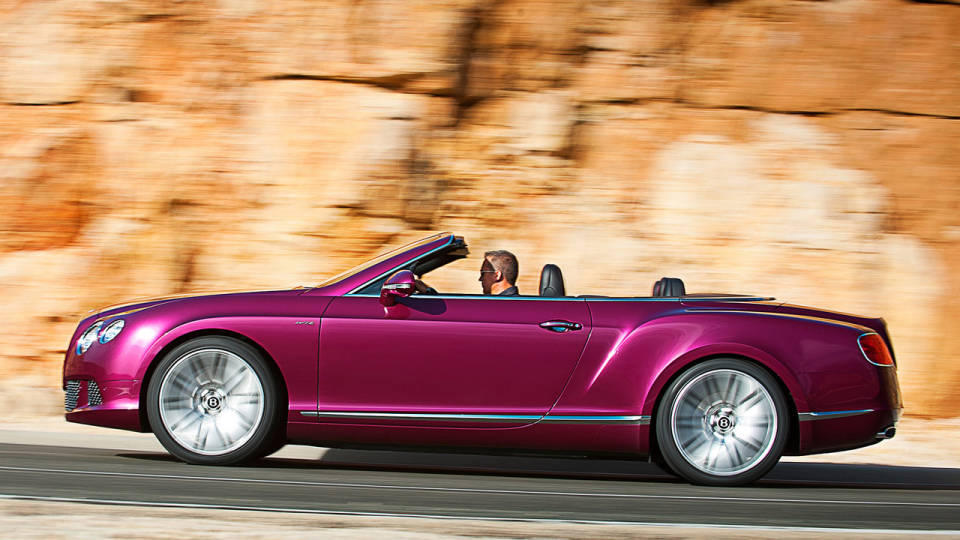
Here are the first photos of the 2013 Bentley Continental GT Speed Convertible, ahead of its reveal at the Detroit Auto Show in January 2013
The convertible is powered by the 6.0-liter twin-turbo W12 engine pulled straight out of its hard-top twin, it develops 625-horsepower and 800 Nm of torque. It will be connected to an eight-speed automatic transmission and an all-wheel drive system which will enable the model to accelerate from 0-100 km/h in approximately 4.2 seconds and hit a top speed of roughly 322 km/h (200 mph).
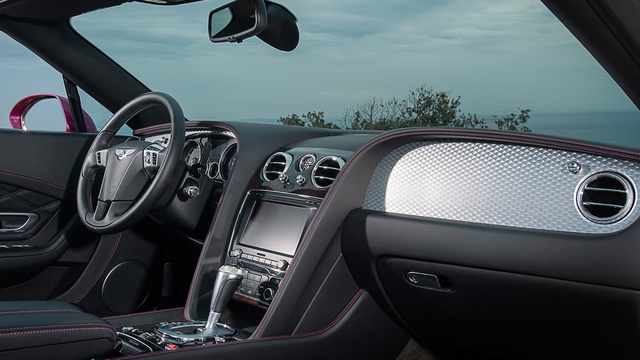
Cosmetically it’s more of the same GT Speed goodness as the coupe, with dark tinted matrix grills at the front, a rifled finish for the tailpipes, GT Speed alloys, the Mulliner Driving Pack with quilted leather and a smattering of ‘GT Speed’ Logos.
the Bentley GTC Speed retains the aggressive stance of the GT Speed sans the roof. While it’s fun to drive with open-top freedom, it does add some extra weight and hampers the stability of the vehicle, though none of these problems are of concern if you’re intent on torturing it at a track.
The GT Speed Convertible will get a permanent all-wheel drive and a Torsen differential as standard. It gets a new, close-ratio, ZF eight-speed automatic transmission with intelligent adaptive control software for smoother changes and a twelve percent increase in economy and CO2 emissions. The steering and suspension systems have been upgraded together with a lowered ride height. Complementing the new set up is a unique set of 21 inch Speed wheels with two finishes and 275/35 R21 Pirelli PZero ultra-high performance tyres.
Lotus has releases a special-edition Evora Sports Racer. The Sports Racer is inspired by Lotus’s 2012 motorsport successes – including lifting the British Endurance Championship trophy – and heralds a host of new colour schemes and better value for money via extra standard equipment.
The Evora Sports Racer is now available with the Carbon Grey, with the Nightfall Blue and with the Aspen White special colors and gloss black finish can be seen on the front splitter, on the side sills and on the rear diffuser. Further black detailing includes the badges, door mirror housings and the gloss black forged wheels. Brake calipers are finished in a choice of black or red.
The Sports Racer comes with the same 3.5-liter Toyota Camry V6 as the Evora and Evora S. It can be ordered as either a standard Evora with 276 horsepower, or as a supercharged S with 345 hp.
Inside, the 2+2 seating option is standard, as are gunmetal dashboard panels. Elsewhere, the black leather ‘Premium Sports’ seats are trimmed with red contrast piping and stitching, with Venom Red leather with black contrast piping and stitching available as an option.
Lotus are also throwing in the Tech Pack for the Evora which gives Cruise, parking sensors and a reversing camera, and the Sports Pack too which gives you a sports mode designed to offer sharper throttle responses, a higher rev limit, a sportier setting for the stability control and cross-drilled brake discs.
UK pricing for the Evora Sports Racer starts at £57,900 for the lower-powered model, and rises to £65,900 for the supercharged car. That represents savings of £6450 to £7150 respectively, versus non-SR optioned cars.
Press Release
For serious drivers, the new Lotus Evora ‘Sports Racer’ – its impressive performance is matched only by its impressive value. It’s been a busy year for Lotus; the arrival of the acclaimed Exige S; featured marque at the Goodwood Festival of Speed; a new flagship retail store in Regent Street; third place in the F1 Drivers’ Championship and fourth in the F1 Constructors’ Championship; and amongst various racing exploits, another series win for a Lotus with an Evora GTC taking the MSA British Endurance Championship. Following the excitement of this race series win, the new Evora ‘Sports Racer’ is a visually enhanced and optimised version of the mid-engined 3.5 litre V6 sports car, available in both naturally-aspirated or supercharged variants. The Evora ‘Sports Racer’ proves its value on the pocket, as well as on the road and track - it delivers phenomenal performance, exclusive style, incredible excitement and genuine affordability! There are three main factors that set the ‘Sports Racer’ apart from the existing Evora range; firstly, it receives a unique exterior colour scheme with an optimised interior to match. Secondly, it comes fully loaded, boasting Lotus’ ultimate specification. While thirdly, it’s more affordable than ever, representing great value. Here’s the detail: Aesthetics: The Evora ‘Sports Racer’ is available in a choice of four colours: Aspen White, Carbon Grey, Nightfall Blue and Ardent Red. To stand out from the crowd, the ‘Sports Racer’ receives unique contrasting accents of gloss black across the roof, front splitter, rear diffuser and side sills, exaggerating the Evora’s aggressive stance and sleek silhouette. Further black elements include black rear badging, black door mirror pods and gloss black forged wheels with a choice of either red or black brake calipers which all work to give the ‘Sports Racer’ a more dramatic and focused appearance. Inside, the 2+2 seating option is standard and comes adorned with black leather ‘Premium Sports’ seats trimmed with red contrast piping and stitching. The dash, doors and centre console receive a liberal dose of Slate Grey SuedeTexTM with red contrast stitching, highlighting the car’s sporting character. Like your interiors a bit louder? Go for Venom Red leather ‘Premium Sports’ seats with black contrast piping and stitching. All Evora ‘Sport Racer’ interiors are complemented by gunmetal dashboard panels, as is standard in the Evora S. Gadgets: The Evora ‘Sports Racer’ comes loaded with optional extras as standard. The ‘Sports Pack’ provides switchable sports mode with sharper throttle response, increased rpm limit and sportier setting for Dynamic Performance Management (DPM), sports diffuser and cross-drilled brake discs. The ‘Tech Pack’ provides upgraded speakers and stereo system, DVD player, 7" WVGA touch screen display, Bluetooth® mobile phone connection, USB connection for various iPod® models, MP3 players and memory sticks, tyre pressure monitoring, cruise control and rear parking sensors. This is topped of with electric power-fold mirrors and a reversing camera as standard. Price: Available in the UK and across Europe, the Evora ‘Sports Racer’ adds outstanding value to the already exceptional Evora range, priced in the UK at £57,900* for the Evora with 280 PS or £65,900* for the 350 PS supercharged Evora S. For UK customers, the cost benefits are clear; by opting for the pre-packaged Evora ‘Sports Racer’ savings range from £6,450 to £7,150 respectively. Lotus Evora Race Cars This year Team Bullrun won the title in the MSA British Endurance Championship in the newly developed Evora GTC and Alex Job Racing has been enjoying success in the ALMS series with the Evora GTE. Meanwhile, the Evora GT4 has been racing successfully in the Brazilian GT, the Iberian Supercar Trophy, Campeonato de España/IBER GT, Cameonato de Portugal GT, the Dutch GT championship and 24 hour races in Dubai, Barcelona and at Silverstone. The Evora GT4 is also competing in Lotus Cup series across the globe. * Prices shown include local taxes, but exclude OTR costs. Fuel consumption for Evora is – urban 21.5 mpg – 13.2 litres / 100km, extra urban 39.6 mpg – 7.1 litres / 100km, combined - 30.3 mpg – 9.3 litres / 100km. CO2 emissions 217 g CO2 / km.
Ugur Sahin Design has unveiled the Rolls Royce Jonckheere Aerodynamic Coupe II. The front of the car is one of the most impressive parts with a colossal grill that pays its respect to
Rolls Royce history and the original car while the round doors are a tribute to the original design which has made the car unique since its build in 1935, for some it is known as “The Round Door Rolls-Royce”
Ugur Sahin Design (USD) was tasked by VDL Jonckheere to design a car which was a modern reinterpretation of the original vehicle. According to USD the concept was put together with the crucial idea of respect for the 77 year old design. That meant the designers were careful to retain the essence of the original, while also making sure to balance it with modern touches which bring it into the 21st century.
Rolls-Royce Jonckheere Aerodynamic Coupe II reproduces the lines and shape of the original car, changing just a few details in order to modernise its look. A very long hood covers almost half of the car, leaving out only the rear passenger compartment and the luggage compartment’s space. The main differences are at the front, where new lights have been integrated above the wheel arches and a new large grille characterises the nose.
A final decision on the one-off production version will be announced in the upcoming months. We can then bring you all of the information on this awesome remake of one of the most mysterious cars in the world.
Press Release Ugur Sahin Design - Rolls Royce Jonckheere Aerodynamic Coupe II After the USD Z03 design concept has made its way to production as "Anadi", UgurSahinDesign is proud to introduce Rolls Royce Jonckheere Aerodynamic Coupe II. "The main goal of this design was to respectfully reinterpret the original Rolls Royce Jonckheere Aerodynamic Coupe I, which was built in Belgium by Henri Jonckheere and his son Joseph Jonckheere in 1935. Unfortunately the "Jonckheere Works" was destroyed during WW2 and no records survived, so who commissioned or designed the original car remains a mystery. They were well known throughout Europe for making bodies on both cars and busses. The later of which is still in production today as VDL Jonckheere. UgurSahinDesign was assigned by VDL Jonckheere to honor its coachbuilding history through a reinterpretation of the original car which currently is in the possession of the California-based Peterson Museum. For us, the original car represents the timeless aspects of automotive art and its impact it can have on a person even after 77 years. The new design was carefully put together with a very crucial thing in mind; "Respect". It is challenging to re-interpret something from that past which has a very imposing and impressive character like the original car, into a modern shape without losing its core essence. Many things like the proportions and lines, the impression some shapes give, are very essential to re-capture in the new design. While keeping the past DNA, injecting modern design elements which are in coherence with the past, is always a challenging task for every designer. It was important to avoid creating a design which is too modern by changing the original proportions too much, while still adding and changing elements in a certain way to avoid creating an outdated impression. With these things in mind, we set out to design a car that reflects a complex character which impresses its surroundings without having to depend on too complicated elements and unnecessary additions. In some way this certain quality might reflect its owner as well. The front of the car is one of the most impressive parts with a colossal grill that pays its respect to Rolls Royce history and the original car while the round doors are a tribute to the original design which has made the car unique since its build in 1935, for some it is known as "The Round Door Rolls-Royce" The rear of the car has the same bold styling with subtle details which do not disrupt the main proportions and the stance of the car. Currently we are negotiating with potential investors and parties who are interested to become involved in the project in order to build an exclusive "One-Off" car which is destined to give its owner the ultimate feeling of luxury."






 Posts
Posts



