Detroit Motor Show: Volkswagen seven seat SUV  

1 评论

https://blogger.googleusercontent.com/img/b/R29vZ2xl/AVvXsEg5UZMyO7c8UFSkjo3S8jfXdaHFnwVLugl98LgsvA7kRa8S6_PeHlXsqO6hedbuFiFDfWP9mVZ5QIECwHJX42JBWmUfzt89lRDuSf289uA4gB10a3ik4x4-ru4EV82k0GokfyngcUecc_3T/s1600/volkwagen-seven-seat-suv.jpg

Volkswagen seven seat SUV will be unveiled at the 2013 Detroit Motor Show.

The SUV concept is likely to use an enlarged version of this platform destined for the next generation Passat mid-sizer, and offer similar accommodation to the strong-selling US-market Ford Explorer SUV.

The new 4×4 will be positioned below the Touareg as a cheaper, more spacious offering – the Touareg makes do with five seats. It will be based on VW’s MQB platform, which is versatile enough to be used in cars as diverse as the Polo and this new SUV, and will be built in the US at the firm’s Tennessee plant.


All Content ......

2013 Volkswagen Golf Plus LIFE  

0 评论

https://blogger.googleusercontent.com/img/b/R29vZ2xl/AVvXsEj47LxaynlSL8LCeGRKvYVl2jdxMlhWp1jvzwfEAIjWT3AHVitPDXEahfWUMGBNTd_aNsoFJ1xD4y6KtkRRlyC3DBb4Dc6ZqAiljyYBiS1xsibpSo5Rb2xaWvyHxfItze7hF_dnR0dXGhY1/s1600/volkswagen-golf-plus-life-01.jpg

2013 Volkswagen Golf Plus Life launched by VW. Prices start from €21,200 for the 1.4-litre petrol-engine version (59 kW / 80 PS). Compared to a standard range model with comparable specification the price advantage is at most €3.400.

Exterior distinguishing features the Life are unique 16-inch rims and extra bits of chrome trim on the grille. Also, the side windows and rear window are tinted, and the car also gains LED daytime running lights integrated into the lower part of the headlights.

The extra features that set the LIFE apart from other models include Climatronic automatic climate control, a winter pack (including heated front seats and windscreen washer jets), the RCD 310 radio, ParkPilot, the Light and Sight pack and the multifunction Plus display.

other standard features include high-comfort seats in the ‘Matrixline’ seat fabric and a central armrest. There is also added a multi-function leather steering wheel. When it is combined with the leather gearlever knob and handbrake handle, it gives the interior a high-class ambience.


Press Release

New special model: the Golf Plus LIFE

Five-door all-rounder with comprehensive specification and big price advantage

Wolfsburg, 21 December 2012 - Volkswagen is launching a highly attractive special model of the Golf Plus: the Golf Plus LIFE. This latest model comes with a comprehensive set of features and is thus perfectly tailored to customers’ wishes. Prices start from €21,200 for the 1.4-litre petrol-engine version (59 kW / 80 PS). Compared to a standard range model with comparable specification the price advantage is at most €3.400.

With over 850,000 units sold, the Golf Plus has established itself as a successful member of the Golf family. Vehicle body height, flexibility and functionality are defining features of this five-door car. The Golf Plus is particularly popular with customers who appreciate the model’s level of comfort. An example: the raised seat position, from which driver and front-seat passenger benefit when getting in and out and which also provides a much clearer overview in traffic.

Flexibility is also a major feature: the rear bench seat, for example, which can be asymmetrically split and folded and slid lengthways by up to 16 centimetres, creates room to transport awkward items. In combination with the front-seat passenger’s seatback, which can be folded right down, the interior cargo space can be extended to 2.3 metres in length. Depending on the position of the rear seats, the boot space capacity is adjustable between a minimum of 395 litres and a maximum of 505 litres. If the rear seatbacks are folded right down, up to 1,450 litres of cargo space is available. A payload of up to 637 kilograms is also possible.

With the launch of the special Golf Plus LIFE Volkswagen is now offering a very high specification model that leaves nothing to be desired and simultaneously impresses with its attractive price. Features include Climatronic automatic climate control, a winter pack (including heated front seats and windscreen washer jets), the RCD 310 radio, ParkPilot, the Light and Sight pack and the multifunction Plus display.

Further standard features include high-comfort seats in the ‘Matrixline’ seat fabric (with storage pockets on the backs of the front seats, height adjustment, lumbar supports and drawers under the front seats) and a central armrest. The multi-function leather steering wheel scores through its ease of use and - together with the leather gearlever knob and handbrake handle - gives the interior a high-class ambience.

Externally this special model can be identified by the 16-inch ‘Spokane’ alloy wheels and the wording ‘LIFE’ on the wings. Chrome rims on the air inlet grilles, an LED registration plate light, fog lights and tinted rear and side windows are further attributes of the Golf Plus LIFE.

The Golf Plus LIFE is being offered with seven petrol and six diesel engines. The petrol engines deliver between 59 kW / 80 PS and 90 kW / 122 PS, while the diesels cover a performance range from 77 kW / 105 PS to 103 kW / 140 PS. Also available as an alternative for the Golf Plus LIFE is BlueMotion Technology and the 6 or 7-speed DSG developed by Volkswagen.

As an add-on for the Golf Plus LIFE Volkswagen is also offering the LIFE Plus pack. This enhances the specification with extra features including an electric slide-and-tilt panoramic glass sunroof and the choice of either ‘Orlando’ or ‘Seattle’ 17-inch alloy wheels. The price advantage for the Plus pack is €950.

The Golf Plus LIFE provides an extremely high level of comfort and safety: in addition to six airbags and ESC (Electronic Stability Control) a range of driver assistance systems is available as options, such as the XDS electronic differential lock, the ‘Park Assist’ parking assistant and the ‘Rear Assist’ reversing camera.

All Content ......

Volkswagen Golf VI R by Cam Shaft and MTB  

0 评论

https://blogger.googleusercontent.com/img/b/R29vZ2xl/AVvXsEjIqJWiv719ublMT6pa9mT0DpRgYIdhdrbeasgR-0v6HVRbi82_dVRQzw2eAwjPP1BCUGemT3CDElznC0_Ly4PlGWBuVOuiEUQInnK3cXOngQ2VLp0pgjVUDTeeThnqL0ogLycDxc4-ATYw/s1600/Volkswagen-Golf-6-R-Electrified-by-CamShaft-1291570536.jpg

The German tuners CamShaft and MTB have worked together to create an upgrade package for the Volkswagen Golf 6 R. Dubbed Electrified, the kit comes with a performance and aesthetic package.

Read More


Press Release

ELECTRIFIED GOLF R by CAM SHAFT

The counterpart to the BMW M GmbH and the quattro GmbH (Audi) is at VW Volkswagen R GmbH (formerly Volkswagen Individual GmbH), also with the headquarter in Wolfsburg, and it was (re)founded in 2010 with the objective of the individualization of the R models Golf, Passat and Scirocco. Now, the from 2008 till present available Golf VI R with its "renovated" 4-cylinder engine along with an exhaust turbocharger is by nature not a child of sorrow, because the 1.984 cm³ already bring up 270 hp (199 kW) as well as 350 Nm max. Torque.

The firm CAM SHAFT from the Lower Rhine Kempen, which specializes in premium car wrapping, has curtly made such a VW Golf R to an object of desire again delivered a proof that every car can get a unique with undue effort. First - in cooperation with the firm MTB-vehicle engineering from Essen – the engine performance of the VW Golf R has been increased up to 325 hp and 430 Nm of Torque by means of their own software optimization level 2. Platinum spark plugs and a downpipe including Sportkat make their essential contribution to the furious forward thrust of the power machine. F2000 brake discs by Tarox and sport brake pads have the powerful and effective compact in its grip at any time. The springs by H & R and - as the connection between the car and road – the Ultraleggera rims by OZ with adequate tires have to be mentioned in particular.

The headline could really allow incorrect conclusions. What is meant is the foil called Electric Orange by BRUXSAFOL, with which the VW Golf R is foiled in a known professional manner by CAM SHAFT. A special type camouflage design stretching from the A-pillar towards the vehicle rear, of course absolutely irregular, does not miss a striking effect.

All Content ......

Volkswagen Eco Up!  

0 评论

https://blogger.googleusercontent.com/img/b/R29vZ2xl/AVvXsEjpvlYo3uykP_OONURkERVJWscNdTmS7WNLq2vmwEQgOuhtmwRhXtBJl5YyoUk5mf4x0SkD0g5cRncXdWwnETNWyLJASboqVbAslECiF0gPVWGc__8o0b4t37WPjgWDBT4OBPdg4EVV4eLX/s1600/Volkswagen-Eco-Up-2.jpg

Volkswagen has announced the Eco Up!, with the German powerhouse claiming the Volkswagen Eco Up! is the world’s most fuel-efficient natural gas passenger car in the world.

It is not specified whether or not the transition from gasoline to natural gas has affected the output of the one-liter engine, but since the official press information doesn`t mention it, we can assume it has the same performance as the regular model.

Available as a three- or five-door hatchback, the eco Up! features a 1.0-liter three-cylinder engine that has been specially modified to run on natural gas. It produces 68 HP (50 kW) and 90 Nm (66 lb-ft) of torque. This enables the model to accelerate from 0-100 km/h in a leisurely 16.3 seconds and hit a top speed of 164 km/h (102 mph).

“The four-seat Volkswagen consumes just 2.9 kg of natural gas (CNG = Compressed Natural Gas) per 100 km; this is equivalent to CO2 emissions of just 79 g/km. This fuel efficiency leads to very low fuel costs,” the company wished to emphasize.


Press Release

To the point: The eco up! and its fuels: Paths towards CO2-neutral mobility of the present and future

Volkswagen launches the eco up! - the most economical natural gas car on the world market
Natural gas and biomethane with tremendous potential for reducing CO2 emissions
Wolfsburg / Munich, 05 December 2012 - The new eco up! is currently the world’s most fuel-efficient natural gas passenger car. The four-seat Volkswagen consumes just 2.9 kg of natural gas (CNG = Compressed Natural Gas) per 100 km; this is equivalent to CO2 emissions of just 79 g/km. This fuel efficiency leads to very low fuel costs: in Germany, the mentioned 100 km cost just over 3 euros in an eco up! that is available as a two-door or four-door; in Italy, the largest market for natural gas cars in Europe, the cost is even less than 3 euros. Today, it is not possible to drive any other all-round car this inexpensively!

Gas engines as interface to alternative energies

However, one of the greatest benefits of natural gas cars like the eco up! is the fact that these models are not limited to being powered by just natural gas, but can also be powered by alternative fuels such as renewable biomethane. Produced from plant by-products, biomethane does not compete with food crops; it is also CO2-neutral, because the car only emits as much carbon dioxide in combustion as it absorbed while the plants were growing. Also true: new methods for producing biomethane – such as obtaining it from straw – will further reduce dependency on classic natural gas. An example: In Germany alone, according to a study by the German Biomass Research Centre in Leipzig, up to 13 million metric tonnes of straw remain unused each year. This biomass could theoretically power four million natural gas vehicles. A first facility for producing biomethane from straw has been operating in Germany since February 2012.

Gas also offers the opportunity of storing electrical energy from renewable sources such as wind power. This involves producing hydrogen by electrolysis, which can be used to operate future fuel cell vehicles. However, until this complex and expensive drive technology debuts on a broad scale, the hydrogen can also be used to produce methane in a second step of the process chain. In turn, the methane can be used as a fuel for cars such as the new eco up!. The world of fuel production and drive systems is on the verge of a revolution. In addition, this synthetically produced natural gas can also be used by gas-powered power plants to generate large amounts of electricity at any desired time. In this way, gas produced from wind energy can serve as a ‘battery’ for the wind power.

Two decades of Volkswagen with natural gas

Volkswagen has been equipping vehicles with natural gas drives since the beginning of the 1990s – at first as a retrofit in conjunction with the IAV subsidiary in Berlin. However, with the growth of natural gas cars, Volkswagen increasingly worked on original plant solutions. One of the goals here was to minimise the effects of natural gas tanks on interior space. The first new car model to be designed for natural gas was the 2002 Golf Estate 2.0 BiFuel – a natural gas powered vehicle of the compact class. Other important milestones followed in 2006 with the market launches of the Caddy 2.0 EcoFuel (Volkswagen Commercial Vehicles) and the Touran 2.0 EcoFuel – these two models extended Volkswagen natural gas drive into the versatile segments of city delivery vehicles and compact vans. In 2009, the Passat debuted as a pioneering 1.4 TSI EcoFuel – thanks to twincharging by supercharger and turbocharger, the new engine offered dynamic performance never before seen in the field of natural gas drives. In the same year, Volkswagen therefore adopted this drive system for the Touran as well; this EcoFuel engine also impressed in the new model generations of the Passat and Touran.

Today – at the end of 2012 – the company offers six natural gas powered vehicles in various classes: the Caddy 2.0 EcoFuel, the extended Caddy Maxi 2.0 EcoFuel (each 80 kW / 109 PS), the Touran 1.4 TSI EcoFuel, the Passat and Passat Estate 1.4 TSI EcoFuel (each 110 kW / 150 PS) and the entirely new eco up! (50 kW / 68 PS). In the upcoming year, the new Golf will also debut in an EcoFuel version. In this vehicle, Volkswagen is offering one of the world’s most versatile natural gas vehicle programmes.

Natural gas and biomethane are pioneering fuels

Natural gas exhibits a significantly higher energy content than petrol or diesel: 1.0 kg of natural gas is equivalent to 1.3 litres of diesel or 1.5 litres of petrol. The energy content of 1.0 kg natural gas amounts to 11.69 kWh; the associated quantity of diesel yields 9.86 kWh, the energy content of petrol is 8.77 kWh. In addition, gas offers the advantage that it can be obtained CO2-neutrally from alternative, renewable raw materials and then combusted: in the combustion of industrially generated biomethane, for example, – it has the same chemical structure as natural gas – the amount of CO2 released is equivalent to the amount previously absorbed by the plants during their growth. Crucial here is the fact that biomethane is obtained from plant by-products and not from the food produced by the plant, which excludes any sort of competition with the food chain.

Share of natural gas vehicles in Europe

On the path towards a future independent of fossil-based oil, natural gas and biomethane – as well as the fuels hydrogen and methane produced by electrolysis – will be important elementary building blocks. With new car models like the eco up!, great progress in the area of producing CO2-neutral gas and extending the refilling station infrastructure as well as governmental support for this type of clean drive will make it possible to significantly expand the share of gas vehicles in large areas of Europe.

In Germany, there are currently around 97,000 natural gas vehicles (as of mid-2012); in 2011, the inventory rose by 4.3 per cent. A look at Italy indicates that this share can be significantly increased under optimal constraints. On the other side of the Alps, the inventory of natural gas vehicles doubled from 382,000 to 785,000 cars between 2005 and 2011. Here natural gas vehicles are promoted with tax advantages, rebates in new car purchases, and exemptions from certain traffic rules. In addition, extension of the natural gas refilling station network is subsidised.

In Germany, however, the full potential has not yet been exhausted, although some natural gas providers already offer rebates of up to 1,250 euros for the purchase of a new car with a natural gas drive, the fuel costs less than petrol or diesel due to a reduced energy tax rate and the number of natural gas refilling stations has risen to 911 (as of October 2012). Given these facts, the fuel strategy of the Federal Republic of Germany assumes that the inventory of natural gas vehicles will rise up to 4 per cent by 2020 – that would be around 1.4 million vehicles. Compared to 2012, that would be an immense increase; the trend in Italy shows, however, that this is feasible.

Biomethane as domestic energy source

Biomethane, often referred to as bio-natural gas, continues to increase in importance thanks to its eco-friendly properties and the possibility of producing in industrial processes in the country in which it is consumed. Even when ‘pure’ natural gas is used, CO2 emissions are reduced by 24 per cent compared to petrol engines. The CO2 emissions situation is further improved when biomethane is used: when 20 per cent biomethane is added to the natural gas at the refilling station, this by itself reduces CO2 emissions by 39 per cent. When fuelled with pure biomethane, the cars emit up to 97 per cent less CO2! In a well-to-wheel analysis (from raw material sourced to the final drive unit), this would make its CO2 emissions comparable – “to those of fuel cell technology or of pure battery-powered electric vehicles – assuming that the electricity and hydrogen are produced from renewable sources,” according to the German Energy Agency (dena).

Global natural gas reserves are estimated to be 525,000 billion m3 (as of 2009) and around 3,000 billion m3 of that amount is extracted annually. So, natural gas is finite as well. This makes a forecast by Berlin-based organisation dena related to the German market for natural gas vehicles for the year 2020 that much more important: “Even if the cited 4 per cent goal is reached, all natural gas vehicles could theoretically be powered with pure biomethane by the year 2020.”

By mid-2011, there were already 57 biomethane plants in Germany, which fed 64,000 standard cubic metres (std. m3/h) into the natural gas network per hour. Today, biomethane is blended at one-fourth of the available natural gas refilling stations in Germany; in addition, nearly 100 stations already offer pure biomethane. This number is the most of any country in the world. One of the technical leaders among producers of sustainably obtained biomethane in Germany is Verbio AG (Leipzig). The company specialises in producing biomethane from material such as manure, animal waste, biological wastes and straw – renewable sources that do not complete with food production. The company has developed a new type of bio-refinery that produces biomethane exclusively from stillage, a waste product of bioethanol production, and straw. Another way of obtaining gas from renewable materials has been practiced since early 2012: biomethane production from nothing other than straw. Verbio AG is the first company in the world to succeed at this.

Another expansion stage is offered by what is known as e-gas, which is also known as power-to-gas. As already described, in this case electricity is used to produce hydrogen by electrolysis, and in a second step the hydrogen is converted to methane. Together with a number of project partners - such as SolarFuel GmbH and the Centre for Solar Energy and Hydrogen Research (both in Stuttgart), the Fraunhofer Institute for Wind Energy and Energy Systems Technology (Kassel) and EWE Energie AG (Oldenburg) - the Volkswagen Group found a way, for the first time, to store overcapacities of renewable electricity – e.g. from wind generators or solar power – on a grand scale. In the reverse direction, the stored gas can be used to power electrical generation plants. The electricity can then be used to drive electric cars – especially for drives over shorter distances –, or it can be used as a fuel for gas and fuel cell vehicles that can cover long distances. Another benefit is realised in the converting the electrolysis-generated hydrogen into methane: the conversion consumes CO2, ensuring that it is no longer emitted into the atmosphere as greenhouse gas – this methane will make cars like the eco up! even cleaner!

All Content ......

Volkswagen Chattanooga builds 100,000th Passat  

0 评论


https://blogger.googleusercontent.com/img/b/R29vZ2xl/AVvXsEjomg2Kuuu1QCjoPp-sCjSGTFw_RKa2nrMt52rpWO1lNkzOIyHGJuNnm69dgK77jMql5ptDPUClnXYhgMQDCy7xURt2pvpcfHGS7g0PCXuGNFMz3vSjbzPqdMivAsw1xvWWNaafuqCYlXM/s1600/100k-VW-Passat-Ch-1.jpg

Volkswagen is celebrating its first important milestone with the production of the 100,000th car at its new $1 billion Chattanooga factory.

The car - a Night Blue Metallic 2.0-liter TDI SEL Premium - was bought by Joanne Benante, who had the key handed to her by Volkswagen Chattanooga CEO Frank Fischer in a special ceremony that included all the plant's employees.

Passat No. 100,000 was completed just nine months after the car went on sale in the U.S. and 114 days after building the 50,000th car. The plant builds all Passats for the U.S. and for export to Canada, Mexico, the Middle East and South Korea.


100,000th Volkswagen Passat 100,000th Volkswagen Passat 100,000th Volkswagen Passat


Press Release

Volkswagen Chattanooga Builds 100,000th Car

CHATTANOOGA, TN--(Marketwire - May 31, 2012) - Volkswagen Chattanooga has achieved another significant production milestone -- the completion of its 100,000th Passat, just nine months after the car went on sale in the U.S. The milestone Passat was handed over to its new owner in a ceremony held today with hundreds of Volkswagen employees at the Chattanooga factory.

The Passat was driven off the line by employees from the factory and into the Conference Center where an all-employee meeting was being held this morning. The keys were then handed to Volkswagen Chattanooga CEO and Chairman Frank Fischer who presented them to owner Joanne Benante, who had come from Atlanta, Georgia, to take delivery at the factory. To the cheers of the employees, she then drove her new car through the middle of the gathering and out the front doors on her way back to I-75 and south to Atlanta.

"We have built each and every one of those 100,000 Passats with a passion for detail that sets the standard for safety and reliability for the mid-size sedan market," Fischer said. "I'm so proud of our team for reaching this milestone so quickly while maintaining the superior quality that earned the Passat the Motor Trend 2012 Car of the Year award," Fischer said.

The 100,000th Passat built at the LEED Platinum Certified Chattanooga factory was a Night Blue Metallic 2.0-liter TDI SEL Premium with six-speed DSG® dual-clutch automatic transmission and Moonrock leather interior.

"Producing 100,000 Passats so soon after the vehicle went on sale in September 2011 is a testament to all the hard work that has gone into making our LEED-certified Chattanooga plant and the Passat such a success, both here and abroad," said Jonathan Browning, President and CEO, Volkswagen of America. "It is further evidence that our momentum in the U.S. market is continuing and we are appreciative of our growing customer base, which has been drawn to the Passat's outstanding fuel economy, German engineering and value," Browning said.

The Volkswagen Chattanooga team celebrated completion of the first customer car on April 18, 2011, the 10,000th Passat on Sept. 8, 2011 and the 50,000th Passat on Feb. 7, 2012.

The 100,000 vehicles include pre-series cars, technical training cars, dealer experience cars, U.S. customer cars and export cars to Mexico, Canada, South Korea and the Middle East.


All Content ......

Volkswagen Beetle Fender Edition  

0 评论

https://blogger.googleusercontent.com/img/b/R29vZ2xl/AVvXsEina-GQ9feDKd6VlckUZGrNBHGKqwHIasRPN_yUMcPQV_7adiDxrS_XxC7Zuvp5KVY1Gtr9tL_kspayesOZPsTolNDmXSjIpUUkEB7u3_Jw6rUalYwJTfi8Dm5RKvmTHi5EY8WoPBWJwos/s1600/2013-VW-Beetle-Fender-Edition-0004.jpg

The Volkswagen Beetle Fender Edition has been unveiled at the 2012 Leipzig motor show in Germany, on June 2.

Volkswagen Beetle Fender Edition is powered by a 2.0L turbocharged generating 200 bhp. Features of this special edition include 18" alloys, bi-xenon headlamps, painted dashboard, Fender logo, 400W nine speakers, sub-woofer, and tweeters. Read the Press Release below and get to know the new Beetle Fender Edition.

Outside, all Beetle Fender Edition vehicles are painted in Deep Black Metallic and also feature brushed chrome exterior mirrors, 18-inch “Disc” aluminum-alloy wheels, Bi-Xenon headlights, and the famous Fender logo.

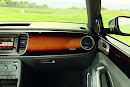
Inside, the dashboard is painted to take on the same glowing hue Fender guitars have. Unfortunately, it sounds like it isn’t real wood. The seats also have exclusive fabric inserts, though the best interior feature is the Fender sound system, also found in the Jetta GLI. Outside, the car has 18-inch chrome “Disc” rims, a deep black paint finish and brushed chrome mirror caps.

The cabin is fitted with a 400-watt, nine-speaker Fender premium audio system. The system comprises four front tweeters, twin 20cm front and 16cm rear speakers, a 20cm Fender Bassman subwoofer and a 10-channel amplifier.


Volkswagen Beetle Fender Edition Volkswagen Beetle Fender Edition Volkswagen Beetle Fender Edition Volkswagen Beetle Fender Edition Volkswagen Beetle Fender Edition


Press Release


THE BEETLE FENDER EDITION: TWO ICONS, ONE STATEMENT


  • Volkswagen presents a new special edition of the Beetle at the Leipzig Auto Show
  • Standard concert-quality Fender Premium Audio System
  • Interior features "Sunburst" dash and contrasting stitching
  • Brushed chrome side mirrors, 18-inch "Disc" aluminum-alloy wheels
  • Fender logo displayed in chrome


First seen as a concept car at the Frankfurt International Auto Show in 2011, the production version of the Beetle Fender Edition makes its world debut at the Leipzig International Auto Show. Volkswagen's iconic coupe is not only fitted with the outstanding premium Fender© sound system, but also visually demonstrates its affiliation with the American musical icon.


The Beetle Fender Edition stands out with unique interior and exterior styling. Its distinctively painted dashboard features the quintessential sunburst color of Fender guitars, and the vehicle's interior is accented with color-contrasting seams that complement the dash's colors. Beetle Fender Edition vehicles equipped with the 200-horsepower 2.0-liter turbocharged four-cylinder TSI© engine will receive seats with exclusive fabric inserts. Outside, all Beetle Fender Edition vehicles are painted in Deep Black Metallic and also feature brushed chrome exterior mirrors, 18-inch "Disc" aluminum-alloy wheels, Bi-Xenon headlights, and the famous Fender logo.


The Fender Premium Audio System debuted in the Jetta GLI in the U.S., but the Beetle is the first VW vehicle in Europe equipped with the high-performance sound setup. Using proprietary Panasonic© speaker technology, the system cuts through noise and other distraction with front dual-voice coil speakers to create a soundstage closely akin to a true, live performance. The concert-quality audio won CNET.com's "Best-sounding car stereo" award.


The Fender Premium Audio System includes no fewer than nine speakers along with a 10-channel amplifier providing 400 Watts of system power:


• Four Fender DeluxeTM Tweeters


  • Two-ohm soft dome with neodymium magnet
  • Wide frequency range and extension
  • Incredibly low distortion
  • Excellent off-axis performance
  • Reveals the harmonic richness of voices and instruments


• Two Fender TwinTM Speakers


  • 20-cm with dual-voice coils
  • Ribbed polypropylene honeycomb cone
  • Wide frequency range and extension
  • High power-handling capability
  • Lightweight and low distortion


• Two Fender Rear Speakers


  • 16-cm with neodymium magnet
  • Ribbed polypropylene honeycomb cone
  • Smooth midrange response


• One Fender BassmanTM Subwoofer


  • 20-cm with dual-voice coils
  • Lightweight and high-efficiency neodymium magnet
  • Glassfiber-reinforced foamed paper
  • Super-low distortion
  • High power-handling capability
  • Powerful and precise bass response


The Beetle Fender Edition will first go on sale in Europe and will be available in America in the fall of 2012. Pricing will be announced at a later date.


All Content ......

2013 Volkswagen CC R-Line  

0 评论


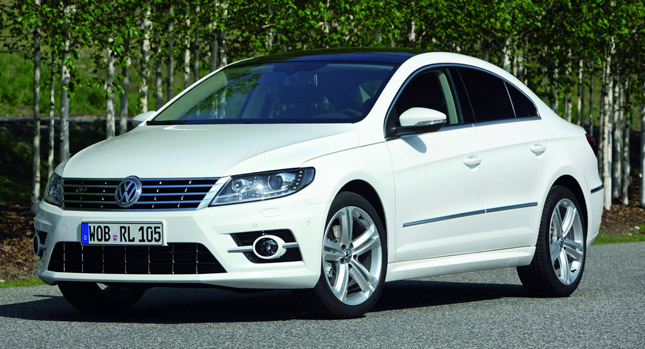
Volkswagen will unveil the R-Line version of the CC at the Auto Mobil International auto show in Leipzig, Germany on June 1st.

Exterior design updates distinguish it from the standard model and include a redesigned and sportier front bumper that boasts a larger air intake as well as projector-style fog lights. A set of unique 18-inch alloy wheels, shaded taillights and R-Line badging completes the look. Inside the cabin, there are stainless-steel R-Line scuff plates and a multifunction steering wheel.

The R-Line variant also makes several options standard, including rain-sensing windshield wipers, heated 12-way power front seats, and those with the six-speed automatic gets paddle shifters on the steering wheel. The CC R-Line does have a manual transmission option and is powered by the standard 2.0-liter turbo-four with 200-hp.

Other standard features include bi-xenon headlights with LED daytime running lights, rain-sensing windshield wipers, heated 12-way power front seats and a premium sound system with eight speakers.


2013 Volkswagen CC R-Line 2013 Volkswagen CC R-Line


Press Release

Volkswagen will unveil the R-Line version of the CC at the Auto Mobil International show in Leipzig on June 1st. This CC model will be available in the U.S. at the end of 2012 with the 200-horsepower, 2.0-liter, turbocharged TSI® engine, mated to either a six-speed manual or a six-speed dual-clutch automatic transmission.


With interior and exterior enhancements, the R-Line upgrades make the CC an even sportier vehicle. Compared with the Sport model, the R-Line gains a more aggressive front bumper design that incorporates a large lower air intake and projector-style foglights with a striking chrome motif. Side skirts and the R-Line logo on the grille further differentiate it from the Sport model, along with shaded taillights and unique and dramatic 18-inch aluminum-alloy wheels. Inside, there are stainless-steel R-Line scuff plates and the multifunction steering wheel for the DSG-equipped model has paddle shifters.


The CC 2.0T R-Line will feature standard Bi-Xenon headlights with LED Daytime Running Lights and the Adaptive Front-lighting System; LED taillights; LED license-plate illumination; rain-sensing windshield wipers; Climatronic® automatic climate-control; heated 12-way power front seats; the touchscreen Premium VIII sound system with HD Radio, eight speakers, and a six-disc CD changer; Bluetooth® technology; iPod® connectivity; and V-Tex leatherette seating surfaces.


The CC was refreshed for the 2013 Model Year, featuring new front and rear styling and an extended range of standard equipment. The 2013 CC went on sale in March and now has seating for five (previous models seated four). The new CC makes an even bolder move towards the automotive luxury class, offering a sleek, dramatic look at a highly attainable price.


All Content ......

Volkswagen Passat R-Line  

1 评论


https://blogger.googleusercontent.com/img/b/R29vZ2xl/AVvXsEgv2AXrcT1hU0E3czv_cu7y499u_9LW_cDw-ZBMOvQNJolxue0ymn3ALDeDKPAD70c-7j2aA2sdW_0OgTHmyE50e3rA_OOvtnhnMzs-20wRXZ49QQLq0_EoNXvRSJBr9dNhenhTwty0UMM/s1600/2012-VW-Passat-R-Line-3%2525255B2%2525255D.jpg


Volkswagen has releases photos and details for the Passat R-Line.

The package will be offered for both sedan and station wagon versions. Based on the Euro-spec model, the car features new bumpers, revised side skirts and a gloss black rear diffuser. There's also a body-color spoiler, a sport-tuned suspension (that reduces the ride height by 15mm) and 17-inch alloy wheels.

The Passat R Line comes with a choice of three gasoline engines (122 hp, 160 hp, and 210 hp) and three diesel engines (105 hp, 140 hp and 170 hp), all of the turbocharged four-cylinder variety. Strangely, what you can’t get in the R Line is our favorite engine: the naturally aspirated 300-hp, 3.6-liter VR6. The previous-generation, European-market Passat R36 was offered exclusively with that engine.

The interior design in the Volkswagen Passat R Line hasn’t been left aside either by the car manufacturer and the cabin is now getting “Kyalami” design sports seats, titanium silver inserts on the dashboard, center console and door panels, stainless steel elements on the pedals, leather wrapped sports steering wheel and the R Line logo on the front door sill plates.

The new Passat R-Line starts at 30,225 Euros in Germany. The company is also offering the R-Line as a 990 Euro package for the Comfortline and Highline variants.


Volkswagen Passat R-Line Volkswagen Passat R-Line Volkswagen Passat R-Line Volkswagen Passat R-Line Volkswagen Passat R-Line Volkswagen Passat R-Line Volkswagen Passat R-Line Volkswagen Passat R-Line


Press Release

Sporty R-line equipment for the Passat

Wolfsburg, 02 May 2012 - The Passat range continues to expand: As a completely independent line of equipment will be offering the new Volkswagen Passat R-Line. Positioned as a particularly sporty model is available from 30 225 € in Germany.

On the outside, the newly designed bumper and side skirts set in the R-sporty styling accents. These belong in the front area of ??particularly large cooling air inlet with the R-Line logo in the grille and integrated fog lamps. The rear of the new Passat R-Line is in the "Gloss Black" dominated painted diffuser. Also affect the dynamic and elegant roof spoiler in body color, and not least the silver anodized roof railing. The features of the Passat R-Line, the dynamically tuned sports suspension, lowering the suspension by 15 millimeters belong (except for vehicles with DCC) and the 17-inch alloy wheels type "Mallory" in titanium silver with 235 mobility tires (optional 18-inch).

The Passat R-Line also scores in the interior with numerous equipment details: In addition to the sports seats in design "Kyalami" the decorative inserts in "titanium silver" in the dashboard, door panels and center console for extra sportiness. A sports leather steering wheel and stainless steel elements on the pedals and the front door sill plates with R-Line logo round out the features.

For the Passat and Passat Variant, there is now also an optional "R line package design" (for Comfortline and Highline). It includes the R-line bumper, the rear or roof spoiler in body color, newly designed side sills in styling as well as the R-R-Line logo on the radiator grille. The design package for the Passat and Passat Variant is a price of 990, - Euros.

All Content ......

/