2010 Switzer Porsche 911 Turbo P800 Tiptronic  

0 评论


The power mad tuners from Switzer Performance have released today the details of the Switzer Porsche 911 Turbo P800 Tiptronic gearbox. The tuner worked on reprogramming the Porsche’s transmission control unit (TCU) software to increase the torque limits, but they needed more than that if they wanted to obtain a total of 700 HP.

For Ohio-based Switzer Performance, however, 700 hp is far from enough. “We first noticed the limitations of the 997 Tiptronic with our P700 (l4) PKG, which, pushed hard on certain high-octane fuels, can cause slipping in the trans.,” explains Tym Switzer, owner and chief engineer of Switzer Performance. “When we released our P800 kit for the 997 Turbos, which makes over eight hundred horsepower, we were forced to limit sales to manual-transmission cars. This didn’t satisfy the customers who wanted the kind of ultimate straight-line performance that the Tiptronic can offer, and – to be frank - it didn’t satisfy us.”

For the project, they added more friction surfaces to improve power delivery, improved shift speed with a new valve body, eliminated transmission slips with more clutches, and reprogrammed the entire transmission control unit software. The result is a Tiptronic 997 Turbo that sprints from 0 to 60 mph in 2.8 seconds, even when using standard air pressure, tires, and fuel.

The new 997 Turbo P800 Tiptronic blasts from 0-100km/h (60mph) in a scant 2.8 seconds. On standard tires. With standard air pressure. On pump gas. Creating one of the quickest daily-driver Porsches in history.


Switzer Porsche 911 Turbo P800 Tiptronic Switzer Porsche 911 Turbo P800 Tiptronic Switzer Porsche 911 Turbo P800 Tiptronic Switzer Porsche 911 Turbo P800 Tiptronic Switzer Porsche 911 Turbo P800 Tiptronic Switzer Porsche 911 Turbo P800 Tiptronic Switzer Porsche 911 Turbo P800 Tiptronic Switzer Porsche 911 Turbo P800 Tiptronic Switzer Porsche 911 Turbo P800 Tiptronic Switzer Porsche 911 Turbo P800 Tiptronic Switzer Porsche 911 Turbo P800 Tiptronic


Press Release

OBERLIN, OH - 06JUL2010 - Tuners everywhere rejoiced when Porsche introduced an upgraded Tiptronic transmission with its 997 Turbo models. The five-speed automatic/manual, built for Porsche by German neighbors Mercedes-Benz, is capable of handling as much as seven hundred horsepower in some applications ... and, for most tuners, that's all the capacity they will ever need.

For Ohio-based Switzer Performance, however, 700 is far from enough. "We first noticed the limitations of the 997 Tiptronic with our P700 (l4) PKG, which, pushed hard on certain high-octane fuels, can cause slipping in the trans.," explains Tym Switzer, owner and chief engineer of Switzer Performance. "When we released our P800 kit for the 997 Turbos, which makes over eight hundred horsepower, we were forced to limit sales to manual-transmission cars. This didn't satisfy the customers who wanted the kind of ultimate straight-line performance that the Tiptronic can offer, and - to be frank - it didn't satisfy us."

After spending a considerable amount of time reprogramming Porsche's transmission control unit (TCU) software to increase the torque limits, Switzer realized that effectively putting more than seven hundred horsepower through the Tip cars would require something more than a software-based solution.

Working with development partners in the US and Europe, Switzer disassembled, upgraded, and rebuilt the Tiptronic transmission to meet customer demands for higher hp projects. The first builds produced transmissions that were stronger and sharper than the factory unit, but not strong enough to contain Tym's hard-hitting P800. This final effort, however, Switzer and his European counterparts pulled out all the stops: additional clutches eliminate slippage, additional friction surfaces ensure more efficient power delivery, a modified valve body to improve shift speed, and (last, but not least) another round of transmission programming which enables the Tiptronic to make the most of its uprated internals.

On its maiden voyage, the new 997 Turbo P800 Tiptronic blasted from 0-60 mph in a scant 2.8 seconds. On standard tires. With standard air pressure. On pump gas.

Subsequent tests confirm that Switzer had produced one of the quickest daily-driver Porsches in history - and Tym isn't shy about using the "B-word" in discussing the car's performance, either. "These cars have Bugatti performance from 0-60. We're still perfecting the calibrations, but we expect our clients will go Veyron hunting very soon, and those guys don't like to lose."

Switzer is in no hurry to share the precise secrets of building nine-hundred-horse-capable Tiptronic transmissions, but the company is perfectly willing to build up transmissions for owners of other tuner cars, as well. "Of course, I have to believe that our P800 kit continues to be the ideal daily-driver/trackday package, but some clients have a comfortable working relationship with TechArt or 9ff. They still want a quicker Tiptronic car that they can turn up the boost on, though, and we can work with them to make that happen, and help them get the most out of the investment they've already made" says Switzer.

Drivers who participate in 0-100 or 1/8 mile dragstrip challenges may find Switzer P800 Tiptronic to be the perfect weapon; with the PCCB ceramic brakes and the 911's traditionally brake-friendly weight distribution, 0-100-0 supremacy is all but assured.

Switzer's transmission upgrades start at 7990 USD, but anyone who wants to hit a hundred miles per hour before the most supercars make their way to sixty may consider it money well spent.

(note: car in photos also shows Switzer L2 Appearance PKG, incl. black tips/wheels + CF GT2-style wing)


All Content ......

Hofele Rivage GT 970 [Video]  

0 评论


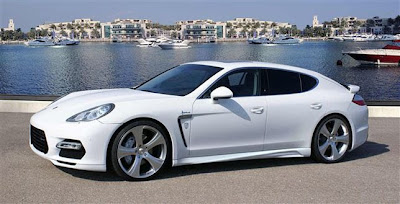
Hofele-Design tuning center to release their styling package for Porsche Panamera,

The package is finished by 22" wheels from the "K-Series".Hofele is also offering high-speed sport brakes kit with six-piston brake calliper and perforated, inner-ventilated brake discs. The interior gets a variety of different materials and colors.

At the front, the Hofele’s styling pack equips the Porsche Panamera with new bumper that has bigger and higher air vents in Cayenne style, and LED-daytime running lights from Panamera Turbo. Moving on the side, a set of sportier skirts lend the four-door, four-seat luxury saloon more dynamic and unusual note. On the rear, the Hofele experts have fitted the ride with new bumper and rear diffuser with an integrated central fog light and 4-pipes stainless steel sports muffler. Other unmistakable highlights in the back are the two R8-like air vents with lamellas which break the Panamera’s “high tail” uniquely and make the rear more interesting than ever.

The Hofele Porsche Panamera is also equipped with an electronic lowering module for its suspension and upgraded brakes with six -piston caliper and large cross-drilled , vented rotors.


Bentley Continental Supersports Convertible Bentley Continental Supersports Convertible Bentley Continental Supersports Convertible Bentley Continental Supersports Convertible


Press Release

Hofele-Design for PANAMERA


"RIVAGE GT 970"

The fine art of technic and design!

With this body kit Hofele-Design carries over the astonishing design lines by the Porsche designers and sharpens them even a bit more. This is the reason why Hofele does not use attachment parts but uses complete elements and bumpers which integrate themselves harmonically into to the original Porsche look without being a distraction.

Up front the bumper with even bigger and higher air vents, the distinctive front grill from the Cayenne Turbo and the LED-daytime running light / indicator element from the Panamera Turbo. Thanks to the big air vents the intercoolers, especially the intercoolers for the Turbo, and the brakes get more air supply.

Also very effective is the big rear spoiler which surrounds the original Panamera rear spoiler and gives the car more down force thanks to the bigger surface.

The side skirts give the car a more dynamic note which looks very good on the car. The rear bumper comes with a rear diffuser with an integrated central fog light. The diffuser has room for the combination with the serial exhaust system as well as for the combination with the Hofele 4-tube stainless steel sports muffler with sportive sound. In the middle area on the left and the right side of the bumper are two air vents with lamellas which break the "high tail" of the Panamera and make the rear more interesting. In this area an even wider look can be achieved by adding black colour.

All plastic parts are made of the highest-quality & heat resistant „HPG" material which received the grade "sehr gut" (A) by the German TUEV authorities and are being mounted to the original points of attachment on the Panamera. All parts are reversible.

For the Panamera Hofele offers wonderful and elegant wheels in 22" from the „K-Series". These wheels are a perfect match to the body kit. The „Chrono"-wheels are available in the dimension 10J x 22".

Our electronically lowering module takes care of a „low profile". On speeds over 80 km/h (50 mph) the module switches back to the serial height to give the suspension its full comfort and reserves on high speeds.

A very effective deceleration is reached through the high-speed sport brakes kit with six-piston brake calliper and perforated, inner-ventilated brake discs.

For the interior Hofele-Design offers a variety of different materials and colours to serve your individual wishes.


All Content ......

Fiat 500 and 500C with New TwinAir 85 HP Two-Cylinder Engine [Video]  

0 评论


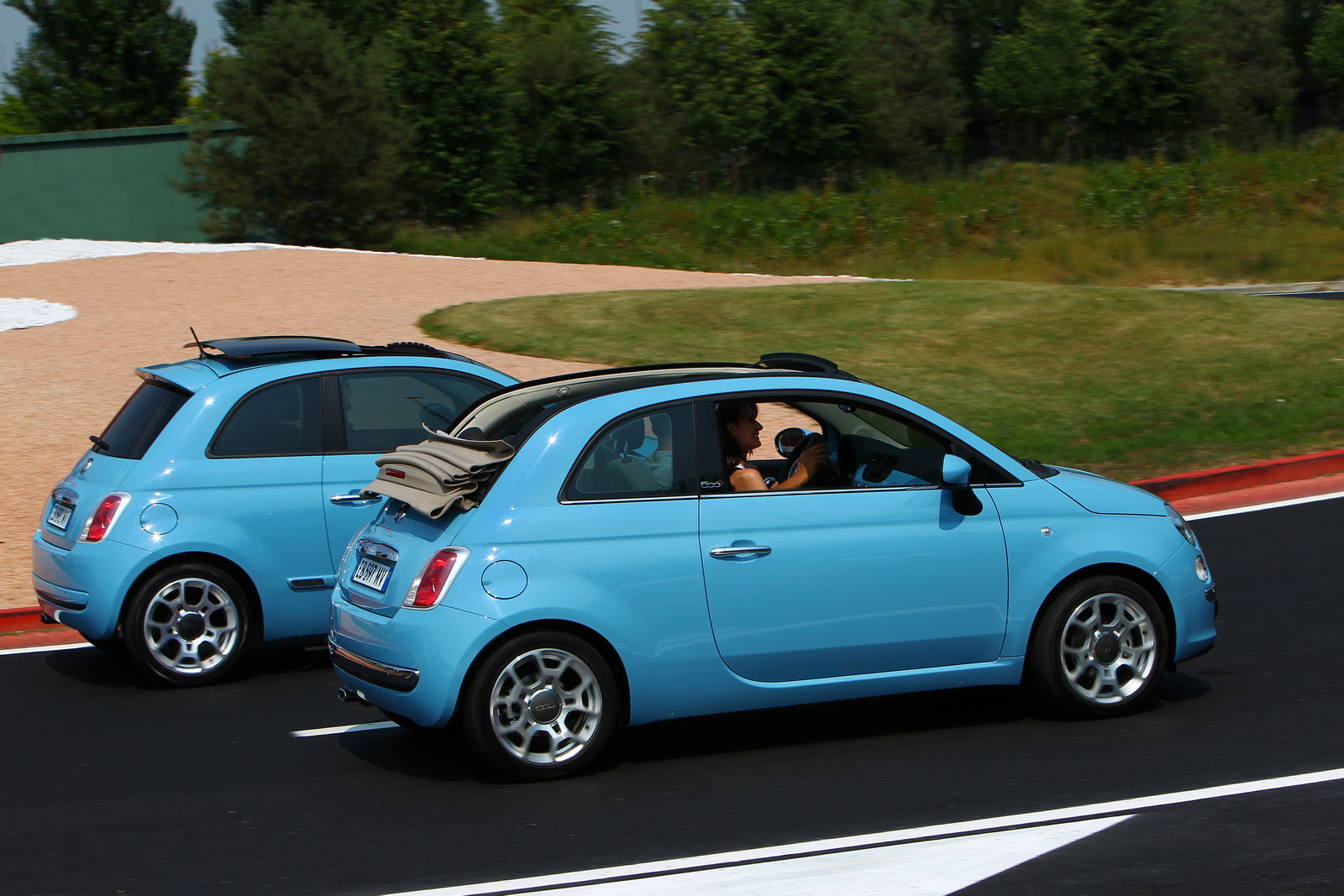
Fiat is unveiled a new innovative TwinAir two-cylinder 85 HP (900 cc) to celebrate the Fiat 500's third birthday, Both the Fiat 500 and 500C TwinAir have a 2-cylinder 900 cc turbo engine that develops 85 hp and 145 Nm of torque.

The new versions will be available in showrooms from September 2010. The Fiat 500 TwinAir and the Fiat 500C TwinAir will be available with a choice between a Dualogic robotised gearbox, With CO2 emissions of 92g/km with the Dualogic robotised gearbox and 95g/km with the manual, Fiat says the TwinAir emits 30 percent less CO2 than engines of equal performance. The engine is also 23 percent shorter and 10 percent lighter than medium-sized four-cylinder engines of similar performance.

The 51kW/102Nm engine in the 1.2i Pop is currently the smallest engine offered in the Australian range, while the 1.3 JTD Lounge features the most frugal engine, with combined cycle fuel consumption of 4.2 litres/100km.


Fiat 500 500C TwinAirFiat 500 500C TwinAirFiat 500 500C TwinAirFiat 500 500C TwinAirFiat 500 500C TwinAirFiat 500 500C TwinAirFiat 500 500C TwinAirFiat 500 500C TwinAirFiat 500 500C TwinAirFiat 500 500C TwinAirFiat 500 500C TwinAirFiat 500 500C TwinAirFiat 500 500C TwinAirFiat 500 500C TwinAirFiat 500 500C TwinAirFiat 500 500C TwinAirFiat 500 500C TwinAirFiat 500 500C TwinAirFiat 500 500C TwinAirFiat 500 500C TwinAirFiat 500 500C TwinAirFiat 500 500C TwinAirFiat 500 500C TwinAirFiat 500 500C TwinAir


Press release

A memorable event was organised, once again in Turin, on 4 July 2007 to introduce the new Fiat 500, exactly 50 years after the Fiat 500. Since then, the second generation of the model that epitomised the history of Italian cars was quick to conquer everyone’s hearts. For the many enthusiasts and customers worldwide, Fiat decided to celebrate each birthday of the little 500 with special events and by introducing highly interesting innovations. In 2008, picnics were organised in the main European capitals and the powerful 500 Abarth was introduced. The same happened in 2009 for the international presentation of the Fiat 500C, the original cabriolet version, which pays homage to the style of the 1957 open top, which received over 32,000 orders in only a few months. And today, to celebrate the model’s third birthday, Fiat is introducing an innovative TwinAir two-cylinder 85 HP (900 cc), which will be marketed starting from next September on the 500 (saloon and cabrio alike).

The first of a new family of two-cylinder engines

made by FPT - Fiat Powertrain Technologies, it implements the revolutionary MultiAir system combined with specific fluid dynamics optimised for maximum fuel efficiency. Furthermore, by taking the concept of downsizing to the extreme and masterfully tuning the basic mechanics, the new family – delivering from 65 to 105 HP – emits 43% less CO2 than an engine of equal performance.

Significantly the new TwinAir 85 HP two-cylinder engine will complement the many technological solutions already adopted by the Fiat 500 to contain consumption and emissions as demonstrated by the recent expansion of the engine range, now featuring a second-generation 1.3 MultiJet delivering power of up to 95 HP. With 8 injections per cycle, the 1.3 MultiJet II improves low rpm torque delivery by up to 38% and cuts CO2 emissions by 6%. Again with a focus on environmental protection, the Fiat 500 (saloon and cabrio) is available with Start&Stop, the system which temporarily stops the engine and starts it again when the car is stationary with the engine idling: this reduces urban cycle average consumption by up to 12%. The principles of the Fiat 500 range are also implemented in eco:Drive, innovative software for analysing driving behaviour and helping motorists optimise consumptions and emissions by using the USB port of the Blue&Me system.

In short, the Fiat 500 perfectly expresses the commitment of Fiat in the field of environmental protection and encourages users to adopt a more responsible, eco-friendly use of the car. It is no coincidence that, for the third year in a row, Fiat is the most environmentally-friendly of the top-selling 10 car brands in Europe, with an average CO2 emission level of 127.8 g/km, compared to the market average of 145.8 g/km (analyses carried out by the independent institution Jato Dynamics). A fundamental boost to obtaining this result was certainly given by the extraordinary growth of methane, the most eco-friendly and cost-effective fuel available on the market today. A forward-thinking direction chosen over ten years ago, that has made Fiat the undisputed European leader in factory-fitted methane systems (OEM), as demonstrated by nearly 400,000 units sold to date in the Natural Power range, which includes 14 bi-fuel (methane/petrol) models - cars and commercial vehicles - for responding to all mobility needs.

Perfectly in line with this environmental protection commitment, the brand new TwinAir 85 HP is a further step forward that will certainly increase the commercial success and international appreciation of the Fiat 500, already demonstrated by the 52 awards assigned worldwide and the goal of 500,000 units made which was reached last April, only 31 months after its release. A web initiative called “500 Thousandth” was launched to celebrate this record with the goal of creating a show car with a body completely covered with 1500 photographs of the faces of owners, celebrities and enthusiasts who contributed in various ways to the car’s extraordinary success. The Fiat 500 Thousandth is the first “collective car”, confirming the spirit of the original model with potential customers being involved from the earliest steps of design. Since 3 May 2006 and for the first time in automotive history, scores of 500 enthusiasts worldwide have been directly involved in the "500 wants you" project, an international marketing platform, and given the opportunity of saying what they want from the future car. The suggestions were picked up by Fiat Automobiles designers and engineers and turned into practical objectives to be reached with solutions and equipment as close to the expectations of potential customers as possible. In short, the Fiat 500 is truly “a car created by the people, with the people’s ideas”. Today, fiat500.com is a community of 120,000 active users from 206 different countries who are involved in over 30 online activities. The web pages have been browsed nearly 240 million times.

As an expression of Italy’s finest automotive design, the 500 is not merely a super-compact city car, but a real platform upon which Fiat Automobiles is building a whole family of cars with technology and attention to detail worthy of a higher category. That’s without forgetting that the Fiat 500 has introduced many innovations and achieved important records in its segment. For example, in 2007, it was the first car only 3.55 metres long to be awarded 5 EuroNCAP stars. Similarly, the adoption of seven standard airbags (it is the only compact to include knee bags) and the availability of advanced ESP for all engine versions (standard on the 1.4 16v 100 HP) was an absolute “première” in this class. That’s without counting that even back in 2007, the entire engine Fiat 500 range was already compliant with Euro 5 standard emission limits, three years ahead of the legal deadline. Last but not least, Fiat 500 was the first small car to offer such a wide, articulated range, typical of higher range models: by combining different versions, engines, interiors, upholstery, body colours, rims, accessories and so on, customers could choose from over 500,000 variants. Product innovations also came in thick and fast: 500 by Diesel (September 2008), 500 Pink (June 2009), 500C (July 2009), 500C by Diesel (June 2010).

Finally, Blue&Me – TomTom, the latest evolution of the Blue&Me system, will be appearing on the Fiat 500 along with the new TwinAir engine. Blue&Me – TomTom is a fully integrated infotainment system that lets you manage telephone, navigation and useful driving information functions using a practical colour touch screen interface. Furthermore, with the launch of the solution on the Fiat 500 a new mediaplayer feature will be introduced that further strengthens the Blue&Me - TomTom proposition.

Blue&Me – TomTom is conveniently and elegantly accommodated on the dashboard of the Fiat 500 to combine the safety and convenience of an integrated solution with the flexibility of portable devices. The device is the result of a partnership between Fiat Group Automobiles and TomTom, the European leader in portable navigation systems, and integrates with the car’s other systems via the Blue&Me system developed in collaboration with Magneti Marelli.

Presentation to the press on the Valentino circuit

The Fiat 500 TwinAir was presented to the international press in Valentino Park, the most famous, and oldest public park of Turin, located on the left bank of the Po river, between the monumental Umberto I (corso Vittorio Emanuele II) and Isabella (corso Dante) bridges. Home to a very rich variety of plants and birds, Valentino Park was the stage of a Formula 1 Grand Prix of the same name until 1955. In brief, a suggestive location that well embodies the combination of "power and environmental-friendliness" embedded in TwinAir technology.

The origins of the park are remote in time: the name "Valentino", of unknown origin, first appeared in the Middle Ages and since the 1600s identified a castle, one of the Residences of the Royal House of Savoy and included in the UNESCO World Heritage Sites list, and the surrounding grounds. The Valentino Park, then not public, was first landscaped in 1630 by Carlo Cognengo di Castellamonte and the project was followed up until 1660 by his son Amedeo.

A new urban phase started for Turin in the second half of the 1800s following the destruction of the city walls ordered by Napoleon and the population spiked. The modern concept of a public park came about at that time and city authorities thought of the Valentino Castle grounds. Works started in 1863-1864, based on a partial project by French architect Barillet-Deschamps. Inspired by the principles of a landscaped park with lanes, thickets and artificial dells, the project also included a small riding track and a lake (later dried) which was used as a skating rink in winter.

Even before its completion, the park staged several important national and international expositions from 1829 to 1961. A so-called medieval village and castle, a composite reconstruction, picking various styles and architectonical elements from medieval buildings in Piedmont and Valle d’Aosta, was built in 1884 for the General Italian Exposition. The park assumed today’s proportions after the 1911 exposition.

In 1935 the Italian car capital set up a racing circuit precisely in the Valentino Park area. It was 4088 metres long and the first event, which was held on 7 July, was an immediate success: Tazio Nuvolari won with Alfa Romeo, ahead of team mates Antonio Brivio and Carlo Pintacuda. Nino Farina came in fourth at the wheel of a Maserati. The starting line was in front of the Valentino Castle and the circuit was mostly inside the park. It was not an easy task to erect mobile grandstands for the audience and a tower for race officials and the press.

The event was repeated two year later, on 18 April 1937. Once again, Alfa Romeo dominated the most important class (GP single-seaters). The race was won by Antonio Brivio, followed by Nino Farina. The driver from Turin had in the meantime joined the Milan-based team. The race was 175 km long in total and the course was particularly twisty, which accounted for an average speed of only 93.629 kilometres per hour. For the sake of comparison, the Monte Carlo winner (Von Brauchitsch on Mercedes) clocked an average speed of 101.815 kilometres per hour.

The race was interrupted for a long time and resumed only after the war, when the automotive industry was attempting to pick up and restart production despite many difficulties. Competitions were in any case important test benches for advertising products.

Automobile Club Torino, on their part, invested considerable efforts and managed to set up the circuit that hosted the First Turin Grand Prix on 1 September 1946. Racing regulations were changing and although a genuine world championship was still to be organised, there were many prestigious events in which major auto makers could compete. Turin was one of these. The circuit set up was meticulous and the public responded enthusiastically. The event was international although only supercharged Alfa Romeo 158s ever won. The results were topped by Achille Varzi and Wimille. The average speed of the winner on the 283.200 km long race was 109.088 km/h because the circuit had been made faster by including a few stretches of corso Massimo D’Azeglio. Sommers of Maserati came in third. Tazio Nuvolari was forced to withdraw. The event continued after the GP with the Coppa Brezzi for cars without turbocharger and displacement of approximately 1500 cm3. Cisitalia 1100 cm3 built by local Piero Dusio dominated the class. Many champions, such as Chiron, Taruffi and Nuvolari, were invited to take part. The latter was involved in an episode that would go down in history. His steering wheel attachment snapped while he was heading the race. Not one to be put off easily, the driver drove a few more laps steering with the little lever used to fasten the wheel but he was eventually stopped by the race officials. The race was won by Dusio, a good driver as well as auto builder.

Ferrari put its name on the roll of honour a year later with Sommers driving to win at an average speed of 108.825 on a remarkable length of 540 km.

1948 was the most prestigious edition of the event. The Italian Grand Prix took place in Turin with the best drivers of the time on the starting line. The race took place during the first weekend of September under the beating rain. The strong Alfa Romeo (Wimille, Trossi and Sanesi) and Maserati (Villoresi, Ascari and Taruffi) teams clashed with the Ferraris of Farina, Sommers and Bira and the Talbots of Chiron, Rosier and Comotti. Many accidents occurred during the race. At the end Wimille drove the only remaining Alfa to the win one lap ahead of Villoresi’s Maserati.

The first Formula 1 World Championship was organised in 1950 and the Italian race took place on the Monza circuit. There were no races in Turin for two years and the Valentino circuit was to host another competition in 1952. The Turin Grand Prix was won by Gigi Villoresi of Ferrari. The Sport class animated the city circuit in 1953 and 1954, while 1955 was the last edition of the Formula 1 GP won by Alberto Ascari on Lancia, after an exciting duel with Luigi Musso of Maserati. The new Formula 1 cars were by now extremely fast. Ascari won at an average of over 141 km/h.

TwinAir 85 HP, world preview

The new two-cylinder engine family made by FPT - Fiat Powertrain Technologies, called TwinAir, is debuting in the Fiat 500 today. This is a brand-new concept on the worldwide auto scene and confirms the leadership of the Fiat Group in this field.

Using next-generation technology, the new engine implements the revolutionary MultiAir system combined with special fluid dynamics optimised for maximum fuel efficiency. Furthermore, by taking the concept of downsizing to the extreme and masterfully tuning the basic mechanics, the new family – delivering from 65 to 105 HP – emits 30% less CO2 than an engine of equal performance.

On sale from next September, the 500 will be the first Fiat model to adopt this, which will be the progenitor of a new family of engines: a 85 HP (900 cc) turbo two-cylinder with the lowest CO2 emission for a petrol engine (92 g/km with a Dualogic robotised gearbox and 95 g/km with manual gearbox) without skimping on performance or driving pleasure. This is thanks to the small-sized turbine which, combined with dedicated valve management strategies, minimises transient response times and, at the same time, keeps maximum power levels high. In this way, despite its small size, the engine ensures excellent performance and an appreciable reduction in fuel consumption: compared with a 1.2 8v, the new 85 HP turbo has 23% more power and a 30% better performance index. In fact, the performance of the two-cylinder is not only equivalent to a 1.4 16v, but consumption is a remarkable 30% lower.

Equipped in this way, the Fiat 500 reaches a top speed of 173 km/h and accelerates from 0 to 100 km/h in only 11 seconds. This remarkable performance corresponds to a significant reduction of fuel consumption and emissions: 4.1 l/100 km and 95 g/km respectively on the urban cycle (with manual gearbox), that becomes 4.0 l/100 km and 92 g/km with a Dualogic robotised gearbox. Furthermore, the Fiat 500 with TwinAir 85 HP is provided with an ECO button – positioned on the dashboard – for further cutting fuel consumption in cities and guaranteeing very eco-friendly running. Two driving modes can be selected: Normal and ECO.

In the first mode, the ECO function is off and the engine delivers the maximum available torque (145 Nm), guaranteeing prompt, brilliant response and a "sportier" driving feel. Steering assistance is also specifically calibrated for Normal mode. No indication appears on the dashboard in this mode (City is not selected). Consequently, this configuration is recommended for maximum response and full enjoyment of all available torque.

In ECO mode, instead, the emphasis is on "eco-friendly" engine running: torque delivery is cut off to 100 Nm at 1750 rpm to minimise consumption and promote a driving style more suitable for city traffic. The steering wheel is lighter (CITY mode is automatically selected). The driver only needs to press the specific button on the dashboard to activate the ECO function. The lettering ECO will appear on the panel (the letter “E” will appear on the panel if the car has a Dualogic robotised gearbox). Furthermore, the Dualogic shifting strategy also switches to ECO mode to further optimise fuel consumption.

Furthermore, compared with a medium-sized four-cylinder of equal performance, the new engine is significantly shorter (-23%) and lighter (-10%), opening the way to further developments, such as methane fuel supply or hybrid technology combinations, again on the theme of greater eco-friendliness. In particular, a methane version of the TwinAir will be available soon providing a further CO2 emission reduction, by adopting a pair of special injectors in addition to the petrol injectors on the intake manifold ducts. Improving on these fuel saving results using internal combustion engines will be difficult and alternative technologies will need to be developed. The combination of traditional engines and electric motors appears particularly promising. Due to its reduced size, the TwinAir is quite suitable for being paired with an electric engine and in general with a device located between the engine and gearbox for recovering and storing the energy that is normally wasted during braking.

Interestingly, the TwinAir 85 HP comes with “Start&Stop” as standard. This device temporarily stops the engine and restarts it, ensuring reductions in fuel consumption and noise in the passenger compartment. The Gear Shift Indicator (GSI) associated to the Start&Stop system is a genuine “co-pilot” that discreetly suggests when to shift gear, leading to more efficient use of the engine in terms of fuel consumption. For example, the GSI may suggest shifting up, by means of an indication on the control panel, to allow the engine to burn a leaner mixture, i.e. one containing less fuel, or shifting down to make best use of the available torque.

Nothing short of an engineering gem, the two-cylinder implements the revolutionary MultiAir technology developed and patented by FPT – Fiat Powertrain Technologies, which was introduced on FIRE engines last year for the first time. The heart of MultiAir is a new electro-hydraulic valve management system that reduces fuel consumption by controlling air directly via the inlet valves (without using the throttle).

MultiAir reduces polluting emissions (thanks to combustion control) and also considerably improves performance by boosting driveability with respect to a traditional petrol engine of equal displacement. In brief, the advantages of MultiAir technology applied to petrol engines are:

- maximum power boosted by 10% compared with a traditional engine of equal size;
- 15% more torque at low rpm and during transitions by applying early intake valve closing strategies to maximise the air introduced into the cylinders;
- less fuel consumption and consequently lower CO2 emissions, equal to 10% by eliminating pumping losses and precise parameter calibration for optimising combustion;
- lower polluting emissions from the engine by optimising valve control strategies during the intake stroke;
- prompter response to accelerator commands due to the constant air pressure upstream of the cylinders combined with extremely fast control of the intake valves.

Also, the new TwinAir engine takes the concept of downsizing to an extreme: by combining a small-sized engine with a next-generation turbocharger performance comparable to – or even better than – that of a larger engine is obtained but with less fuel consumption and lower emissions. Not only that, the turbo significantly increases the maximum torque, making it available at a very low rpm, with the result of offering greater flexibility and an unrivalled responsiveness compared to conventional aspirated engines.

All this comes with a simple build to the benefit of strength and reliability.

Last but not least, the new engine was painstakingly optimised and tuned. For instance, the basic two-cylinder architecture – combined with the low friction of internal parts – ranks this engine best in the world as far as friction is concerned. Furthermore, calculated simulations have been used to identify the best possible unit displacement in terms of thermo-dynamic efficiency, and the best fluid dynamic configuration to optimise and get the best out of the MultiAir system. Finally, special attention has been placed on the NVH (Noise, vibration, and harshness) aspect to ensure vibration performance at least equivalent to that of a four-cylinder, with equal performance but with a characteristic sound. For this purpose, a balancing countershaft was used to maintain optimal vibration levels in all operating conditions of the engine, from idling speed to top power.


All Content ......

Bentley Continental Supersports Convertible at Goodwood Festival of Speed 2010  

0 评论


The new Bentley Continental Supersports Convertible made its first public driving debut at 2010 Goodwood Festival of Speed moving motor show, With several charging runs up the famous driveway, it proved to be quite the hustler when it comes to on-track agility and overall driving performance. Throughout the weekend, the Supersports Convertible – with its top

Throughout the weekend the Supersports Convertible, which is capable of a potential top speed of 202mph and a 0-60mph sprint time of 3.9 seconds, was piloted by the racing legend and honorary ‘Bentley Boy’ Derek Bell who used his expert knowledge of the climb to set a series of typically rapid ascents and give the Goodwood spectators plenty to talk about.

Those performance numbers are provided courtesy of the twin-turbo W12 engine producing 630 PS (621 bhp / 463 kW) and 800 Nm (590 lb-ft) of torque.

Both the Continental Supersports Coupe and Convertible are now on sale with first deliveries of the convertible due later this summer.


Bentley Continental Supersports Convertible Bentley Continental Supersports Convertible Bentley Continental Supersports Convertible Bentley Continental Supersports Convertible Bentley Continental Supersports Convertible Bentley Continental Supersports Convertible


Press Release

BENTLEY'S SUPERSPORTS CONVERTIBLE MAKES RAPID DEBUT AT GOODWOOD FESTIVAL OF SPEED


(Crewe, England. 5 July 2010) Bentley's Continental Supersports Convertible, the world's fastest production drophead, made its official public driving debut at the 2010 Goodwood Festival of Speed. With several searing runs up the famous hill, it forcibly underlined its supercar performance credentials.

Throughout the weekend the Supersports Convertible, which is capable of a potential top speed of 202mph and a 0-60mph sprint time of 3.9 seconds, was piloted by the racing legend and honorary ‘Bentley Boy' Derek Bell who used his expert knowledge of the climb to set a series of typically rapid ascents and give the Goodwood spectators plenty to talk about.

The Supersports Convertible was joined in the supercar paddock by its equally powerful and capable coupe stablemate - the 621bhp Bentley Continental Supersports which returned to Goodwood after making its own debut in 2009.

Whilst Bentley's flying Supersports models powered up the hill there was also the opportunity to catch a glimpse of Crewe's new luxury flagship, the Mulsanne, at this year's Festival of Speed.

Over 170 hours - almost half the entire build process - goes into handcrafting the Mulsanne's luxurious interior which combines the traditional wood veneers and leather hides Bentley is renowned for with the latest in-car technology and the world's most powerful in-car amplifier (offering 2200 Watts) produced in partnership with Naim Audio.

Both Continental Supersports models are now on sale with first deliveries of the convertible due later this summer. The new Mulsanne, which is about to enter full production at the company's Crewe headquarters, has received an extremely positive reaction and Bentley has already received significant expressions of interest that will account for production through 2011. The first deliveries of Mulsanne will arrive this coming Autumn.


All Content ......

Mercedes-Benz S 350 BlueTEC price  

1 评论


Mercedes has announced the S 350 BlueTEC is now available, in Germany, for €76,279.

Powered by a V6 diesel engine that generates 258 hp and 620 Nm of torque, the car is enabled to accelerate from zero to 100 km/h in 7.1 seconds and reach an electronically limited top speed of 250 km/h. Because of the AdBlue emission control, the new model produces a combined fuel consumption of only 6.8 l/100km (177 g/km of CO2). It is already in compliance with the emission standards planned for 2014 with the introduction of the EU 6 standard.

Along with the good performance, the S350 BluTEC also has astonishing fuel economy, as it uses just 6.8 litres of diesel per 100 kilometres. And it’s one of the cleanest diesel engines on the market because it has AdBlue emission control system.

The S350 BlueTEC should equal or outdo the S400 Hybrid on fuel efficiency, but we'll wait for the EPA to render its decision. The hybrid S-Class is rated for 2010 at 19 mpg city, 26 mpg highway.

Interior highlights include the contrasting stitching on the PASSION leather package and the Exclusive PASSION leather package. Alcantara is used for the roof liner and to cover the A-, B- and C-pillars. There is also a new Bang & Olufsen BeoSound AMG sound system that comes with a combination of 15 loudspeakers and two amplifiers with a total output of 1200W.

Source: Mercedes-Benz


2010 Mercedes-Benz S 350 BlueTEC 2010 Mercedes-Benz S 350 BlueTEC 2010 Mercedes-Benz S 350 BlueTEC 2010 Mercedes-Benz S 350 BlueTEC 2010 Mercedes-Benz S 350 BlueTEC


Press Release

New BlueTEC model and active assistance systems for the S-Class: Enhanced efficiency, safety and luxury

The new S 350 BlueTEC which is now available from Mercedes-Benz is the most efficient and safest S-Class ever. And thanks to AdBlue® emission control it also offers one of the cleanest diesel models in the world. With combined fuel consumption of just 6.8 litres of diesel per 100 kilometres (NEDC) - corresponding to CO2 emissions of 177 grammes per kilometre - the new diesel model is eleven percent more economical than its predecessor. At the same time, the power output is up ten percent at 190 kW (258 hp) and torque is 15 percent higher at 620 Newton metres. In addition, the S 350 BlueTEC already complies with the emission levels which are planned for 2014 with the introduction of the EU 6 standard. Other new features for the S-Class of model year 2010 include Active Blind Spot Assist and Active Lane Keeping Assist.

The new S 350 BlueTEC combines outstanding safety and comfort plus performance on a par with an eight-cylinder vehicle with the excellent fuel consumption and emission values of a mid-size model. At 6.8 litres per 100 kilometres, the S 350 BlueTEC undercuts its predecessor model by 0.8 litres. CO2 emissions have similarly dropped by eleven percent, from 199 to 177 grammes per kilometre. At the same time output characteristics have improved, maximum power output rising from 173 kW (235 hp) to 190 kW (258 hp) with the current V6 engine and torque hitting a massive 620 Newton metres. The highly efficient and clean V6 diesel engine assures the luxury saloon of impressive performance, with acceleration from 0 to 100 km/h in just 7.1 seconds and a top speed of 250 km/h (electronically limited).

BlueTEC is a technology developed by Mercedes-Benz to reduce emissions from diesel vehicles, in particular nitrogen oxides. To this end AdBlue®, an aqueous urea solution, is injected into the exhaust flow. This releases ammonia, which converts up to 80 percent of nitrogen oxides into harmless nitrogen and water in the downstream SCR (Selective Catalytic Reduction) catalytic converter. As a result, the S 350 BlueTEC already complies with the emission levels which are planned for 2014 with the introduction of the EU 6 standard. The AdBlue® tank is installed under the luggage compartment floor and has a capacity of 25.7 litres. The tank is replenished at the regular maintenance intervals every 25,000 kilometres. The price for the new S 350 BlueTEC stands at € 76,279.00.

Active Lane Keeping Assist and Active Blind Spot Assist

In parallel with the CL-Class, Mercedes-Benz is also introducing two new safety systems for the S-Class which can help to avoid dangerous situations and accidents. When the wheels pass over a broken lane marking, the system activates an electric motor in the steering wheel which triggers brief vibrations - a subtle but effective warning signal. Active Lane Keeping Assist takes effect when the vehicle unintentionally passes over a continuous line to the right or left of the lane. In this case it gently brakes the rear wheel on the opposite side of the vehicle to counteract the drift away from the lane. Active Lane Keeping Assist employs the ESP® electronic stability programme for this purpose.

Active Blind Spot Assist is now available as a further new feature for the S-Class. This system warns the driver by means of a red signal in the glass of the exterior mirror when it detects that changing the lane may lead to an accident. Close-range radar sensors scan the area directly alongside and behind the car for this purpose. If the driver ignores the warnings and a vehicle in the neighbouring lane comes dangerously near - when cutting in after overtaking, for example - gentle corrective braking intervention will take place via ESP® on the wheels on the opposite side of the vehicle. This results in slight yawing of the saloon around its vertical axis as a result of the varying brake force distribution.

Where an accident is nevertheless unavoidable, braking intervention by Active Blind Spot Assist helps to reduce the severity of impact. Active Lane Keeping Assist and Active Blind Spot Assist are available for the S-Class now as part of the Driving Assistance package PLUS.

New leather appointments with stitching

To personalise the interior of the S-Class, Mercedes-Benz is also offering new, high-quality leather appointments which underscore the luxury saloon's exclusive character. A defining feature is the contrasting stitching on the PASSION leather package and the Exclusive PASSION leather package (standard for S 600). Colours and scope of appointments vary according to upholstery and package contents.

The PASSION leather package features the stitching on the fine leather of the seats and armrests as well as on the top and bottom of the instrument panel support and the door panelling, all of which are finished in ARTICO, a man-made leather which is pleasant to the touch. The Exclusive PASSION leather package features seats, armrests, instrument panel support, door linings, ruffled pockets and a rear shelf in fine leather with contrasting stitching. Alcantara is used for the roof liner and to cover the A-, B- and C-pillars.

Tailor-made high-end sound system

The new Bang & Olufsen BeoSound AMG sound system tailored to the luxury saloon's interior is available as a further new feature for the S-Class (standard for S 65 AMG). A combination of 15 loudspeakers and two amplifiers with a total output of 1200 W ensure a thrilling quality of sound from this high-end system. The algorithm of the digital sound processor allows a choice between high-end studio sound and surround sound, and the audio output can be focused exactly on the seat positions of the driver, front-passenger, rear seats or the centre of the interior.

Music can be enjoyed on long trips without tiring the listeners, thanks in particular to the dynamic compensation of driving noise: a microphone integrated in the roof lining between the gullwing doors provides a continuous supply of data on the current interior noise level. The digital sound processor analyses all the frequency bands and increases the volume according to the vehicle's speed - via individual adjustment of each loudspeaker and the different frequency ranges.


All Content ......