Like most of the big players in the automotive industry that had to retract, right-size and close facilities across the country, electric vehicle startup Fisker Automotive has also had to bite the bullet and consolidate some of its operations. A little over a year after establishing its 34,000 square foot engineering and development center in Pontiac, Michigan, Fisker has announced that it will close the facility and transfer its 30 staff to its headquarters located in Irvine, California.
Fisker isn’t completely abandoning the state of Michigan as the company fully intends on maintaining its relationship with local suppliers.
The move is scheduled to take place on March 1 at which point Fisker’s headquarters will house all design, engineering, sales, marketing, and administrative operations. At the same time Fisker also plans to increase the number of new hires, though no numbers have been revealed.
According to the company, the consolidation is to "accelerate development of its next-generation plug-in hybrids".
The company’s first model, the upcoming Karma plug-in hybrid luxury sedan, will be built by independent vehicle manufacturer Valmet in Finland but its next model, codenamed Project NINA, will be built at a former GM plant in Delaware, which Fisker secured the rights to thanks to a $528 million loan from the U.S. Department of Energy. More Photos
Japanese manufacturers, residents of the BLAND unit in the trauma ward that is the modern auto industry (for the most part), put out some huge and extremely popular sports cars in the 90's. Toyota had the twin-turbo Supra; Mitsubishi had the 3000GT VR-4; Mazda had the twin-turbo RX-7 and Nissan had the twin-turbo 300ZX and Skyline GT-Rs. And Honda? Well, they tried to pick a fight with Ferrari with their naturally-aspirated V6-powered NSX, but as for the common man? That's where the SSM concept stepped in, foreshadowing the S2000 roadster.
The Mercedes-Benz Museum is the only museum in the world that can document in a single continuous timeline over 120 years of auto industry history from its very beginnings to the present day. On nine levels and covering a floor space of 16,500 square metres, the museum presents 160 vehicles and over 1,500 exhibits. As a place of innovation, it also demonstrates that history can point the way ahead.
The exhibition not only presents the fascinating history of the Mercedes-Benz brand, it also affords illuminating insights into the future. This dual function is also reflected in the architecture of the Mercedes-Benz Museum, designed by the UNStudio of Dutch architects van Berkel and Bos, Amsterdam.
The building's interior is inspired by the double helix structure of the DNA spiral that carries the human genome. This in turn illustrates the Mercedes-Benz brand's philosophy of originality – to continuously create radically new products to advance the cause of human mobility.
During a two-hour tour of the exhibition, visitors experience a unique journey through automotive history. Transported by lift to the uppermost level of the museum, the visitor arrives back in the year 1886, where two museum tours gradually spiral their way down through the extensive collection and back to the museum exit.
The first of the tours consists of seven Legend rooms which narrate the chronological history of the brand. The second tour groups the wealth of vehicles on display into five separate Collection rooms, which thematically document the breadth and diversity of the brand portfolio and collection.
The visitor can switch from one tour to the other at any time. Both tours finish at the banked curve entitled Silver Arrows – Races & Records. The exhibition is rounded off by the Fascination of Technology display, which offers a glimpse into day-to-day work at Mercedes-Benz and also presents topics concerning the future of the automobile.
NEW MÉGANE COUPÉ-CABRIOLET, THE ELEGANCE OF A COUPÉ, AND THE ENJOYMENT OF OPEN-TOP MOTORING
New Mégane Coupé-Cabriolet rounds off the renewal of the New Mégane family in style with introduction of the line-up's sixth body type. The newcomer's striking looks combine the elegance of a coupé with the promise of the thrills that go hand-in-hand with driving a cabriolet. New Mégane Coupé-Cabriolet builds on the strengths that forged the success of its predecessor – including a large, folding glass roof and a raft of user-friendly equipment – yet it goes further still by offering customers:
unruffled open-top motoring thanks to the forward position of the windscreen and a fixed glass wind deflector situated behind the rear head restraints,
outstanding handling performance thanks to a stiffer chassis and a new electric power steering system,
a broad choice of engines, including one which can be ordered with the all-new automatic EDC (Efficient Dual Clutch) transmission.
careful attention to quality, including high-gloss black and satin-effect chrome exterior features.
New Mégane Coupé-Cabriolet is manufactured alongside Scénic and Grand Scénic at Renault's Douai plant in France. It consequently benefits from the experience gained since the beginning of the Mégane programme, including the assembly of the former-generation Mégane Coupé- Cabriolet.
New Mégane Coupé-Cabriolet is an open invitation to enjoy an alternative way to go motoring, and is an elegant illustration of Renault's new brand signature, 'Drive the Change'.
New Mégane Coupé-Cabriolet goes on sale this spring.
ARRESTING LOOKS FROM EVERY ANGLE
New Mégane Coupé-Cabriolet completes the renewal of the New Mégane family in style with a car whose intrinsic appeal is sure to turn heads. Its looks exude a distinguished elegance that is underpinned by the large glass roof which tells you that this is unmistakably a cabriolet, even in its coupé configuration. This high-gloss finish black glass roof contrasts with the satin-effect chrome windscreen frame, while the sweep of the waistline adds an unmistakably high-end feel that more than does justice to its cabriolet persona. The dark red taillights feature a linear lighting pattern and LED brake lights to provide a distinctive rear lighting signature.
The interior layout carries over the same prevailing elegance and refinement, thanks not only to the quality of the materials employed and to the high standard of finish, but also to the three choices of trim, which range from dark charcoal and light beige to the charcoal and red two-tone finish with leather seats.
Although the floating dashboard is identical to that of New Mégane Hatchback, the seats offer additional lateral support, while the 'butterfly wing' door trim panel is specific to New Mégane Coupé- Cabriolet and adds to the newcomer's inherent elegance.
CHIC AND PRACTICAL
New Mégane Coupé-Cabriolet's occupants benefit from the thrills of unruffled open-top motoring in all conditions. The standard folding glass hard roof boasts a transparent glazed area of 0.47 sq. metres (a segment best) to ensure a brightly lit cabin and a sensation of space and freedom. It also guarantees outstanding acoustic and thermal comfort, as well as the reassurance of greater protection from vandalism. The fully-automatic, electro-hydraulic opening mechanism of the two-part roof enables the driver to lower the top in just 21 seconds at the press of a button.
With the top down, the driver and passengers alike enjoy a real sense of freedom. Entry and exit is made easier by the more forward position of the windscreen header-rail which has been advanced by 6cm compared with Mégane II Coupé-Cabriolet.
To make sure that all occupants are able to benefit from the pleasure of riding al fresco without the drawbacks, New Mégane Coupé-Cabriolet is equipped with a fixed glass wind deflector (unique in the segment) positioned behind the back seat headrests. This arrangement enables four people to enjoy draft-free driving at speeds of up to 90kph and, when used in conjunction with the removable mesh deflector screen located behind the front seats, allows two occupants to travel free from buffeting whatever the speed.
New Mégane Coupé-Cabriolet's length of 4,485mm ensures that the driver and the three passengers benefit from a standard of comfort expected of a family car.
The driver is treated to a carefully thought-through environment and conveniently positioned controls which carry over solutions previously employed for New Mégane Hatchback and New Mégane Coupé:
controls clustered either around the steering wheel or on the centre console,
height- and fore/aft-adjustable driver's seat (through 70mm and 240mm respectively),
position memory for front seats, after being tipped forward,
reach and height-adjustable steering wheel (through 45mm and five degrees respectively).
In addition to New Mégane Coupé-Cabriolet's carefully-honed lines, special attention has gone into ensuring that it is a practical package, too, and that includes the boot:
automatic closing for simple, secure locking
large capacity (417 litres with the roof up, and 211 litres with the roof down)
easy to access, with a segment-best sill height (590mm from the ground) and aperture (258mm) with the roof down, enabling three cabin cases to be carried side by side.
A RAFT OF PRACTICAL, USER-FRIENDLY HIGH-TECH FEATURES
Like all the models that make up the New Mégane family, New Renault Mégane Coupé-Cabriolet is available with a long list of high-tech features, most of which are more readily associated with the next segment up:
hands-free starting, and hands-free locking as the card-holder walks away from the car,
electric parking brake
automatic dual-zone three-mode (soft-auto-fast) climate control
3D sound by Arkamys® audio with Plug&Music connectivity (USB, mini-jack plug)
Carminat T omT om® navigation, the market's most competitively priced built-in sat-nav system
customized settings and activation/deactivation of certain functions (daytime running lights, volume of audible parking proximity warning).
A PERFECTLY SMOOTH RIDE
New Renault Mégane Coupé-Cabriolet delivers the same high standard of driving precision as Mégane Hatchback and Mégane Coupé to provide an enjoyable, responsive ride:
The MacPherson-type front suspension is attached to a so-called 'horned' subframe, an arrangement that ensures a level of lateral rigidity that is three-times superior to that of the former-generation Megan Coupé-Cabriolet.
The rear suspension's torsion beam features a lighter, closed-profile beam that delivers enhanced torsional stiffness.
The new electric power steering system is more responsive and refined, and gives even more accurate feedback of information from the road.
The torsional rigidity of the bodyshell has been uprated by 80 per cent compared with Mégane II Coupé-Cabriolet in order to match the increased stiffness of the suspension and for even greater handling precision, whether the roof is up or down.
New Mégane Coupé-Cabriolet is available with a choice of seven efficient and eco-friendly petrol and diesel powertrain configurations.
Petrol engines:
The 1.6 16V 110hp engine mated to a six-speed manual gearbox.
The TCe 130 (Turbo Control efficiency) driving through a six-speed manual gearbox.
The 2.0 16V 140hp engine available with the new continuously variable transmission (CVT) for even greater driving comfort thanks to smooth, step-less gearshifts.
The diesel engine range comprises the following Euro5-homologated powerplants:
The dCi 110 DPF, mated either to the brand new six-speed EDC (Efficient Dual Clutch) dual-clutch automatic transmission (see below) or to a manual six-speed gearbox.
The dCi 130 DPF which drives through a six-speed manual gearbox.
The dCi 160 DPF also with a six-speed manual gearbox.
EDC (Efficient Dual Clutch) dual-clutch automatic transmission
The six-speed EDC (Efficient Dual Clutch) dual-clutch automatic transmission fits perfectly with Renault's bid to combine ride comfort, driving pleasure and respect for the environment. Based on DCT (Dual Clutch Transmission) technology, it stands out as a genuine clean-break solution compared with conventional automatic transmissions thanks to:
CO2 emissions and fuel consumption comparable to those of a vehicle equipped with a manual gearbox,
fast, smooth, automatic gearshifts,
instant response to the driver's demands.
THE PLEASURE OF OPEN-TOP MOTORING IN TOTAL SAFETY
When it comes to safety, New Renault Mégane Coupé-Cabriolet reaps the benefits of the brand's extensive expertise in this field. Like all the models that make up the New Mégane range, it has been engineered to boast exemplary passive and active safety performance.
An extensive range of equipment is available to help drivers anticipate risk situations: • front seatbelt warning lights,
tyre pressure monitoring system,
directional bi-Xenon headlamps with cornering dipped beams,
automatic headlamp activation,
automatic windscreen wiper activation
cruise control with speed limiter.
New Mégane Coupé-Cabriolet comes with a comprehensive range of driving aids, too:
ABS with electronic brakeforce distribution,
Emergency brake assist,
ESC with understeer control.
New Mégane Coupé-Cabriolet's chief passive safety features are:
programmed structural deformation designed to protect the cabin – and therefore occupants – in the case of a rollover, thanks to reinforcement of the windscreen pillars, body sides, sills and floor,
automatic pyrotechnic deployment of the rollover hoops should dedicated sensors detect that a rollover is imminent,
seatbelt pretensioners and load limiters,
adaptive frontal airbags,
dual-volume head/thorax/pelvis lateral airbags,
anti-submarining airbags incorporated in the front seat cushions,
side impact sensors,
anti-whiplash head restraints,
Isofix child seat anchorage for rear seats.
The public will get its first chance to see New Mégane Coupé-Cabriolet when it is unveiled at the forthcoming Geneva Motor Show (March 4-14, 2010). It will also be displayed at L'Atelier Renault on the Champs-Elysées (N°53) in Paris, France.
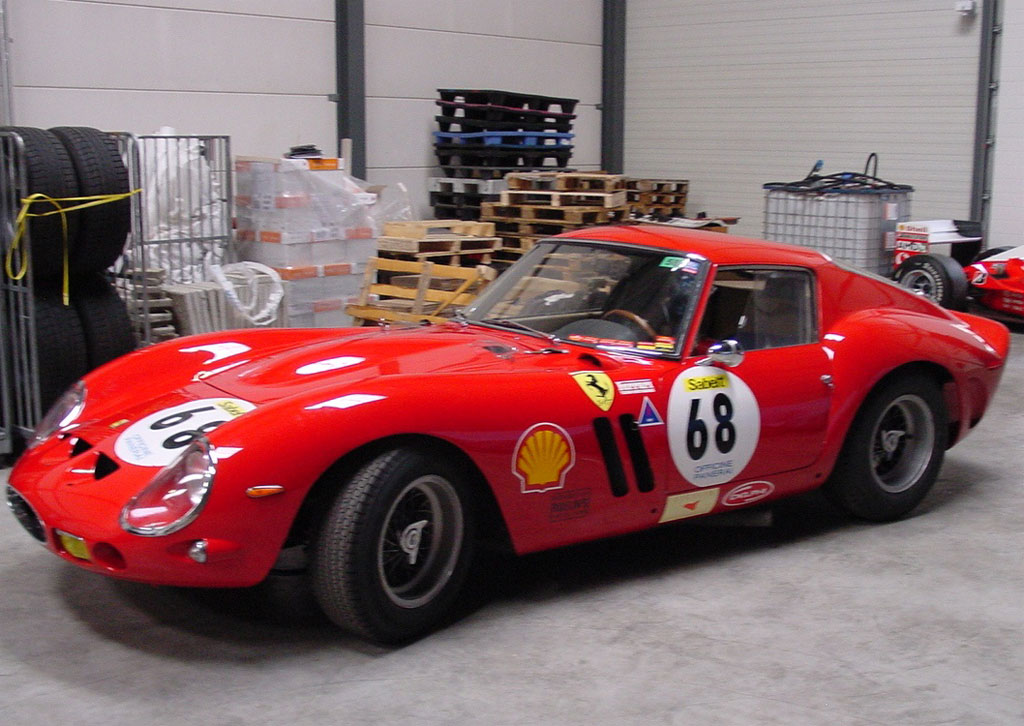
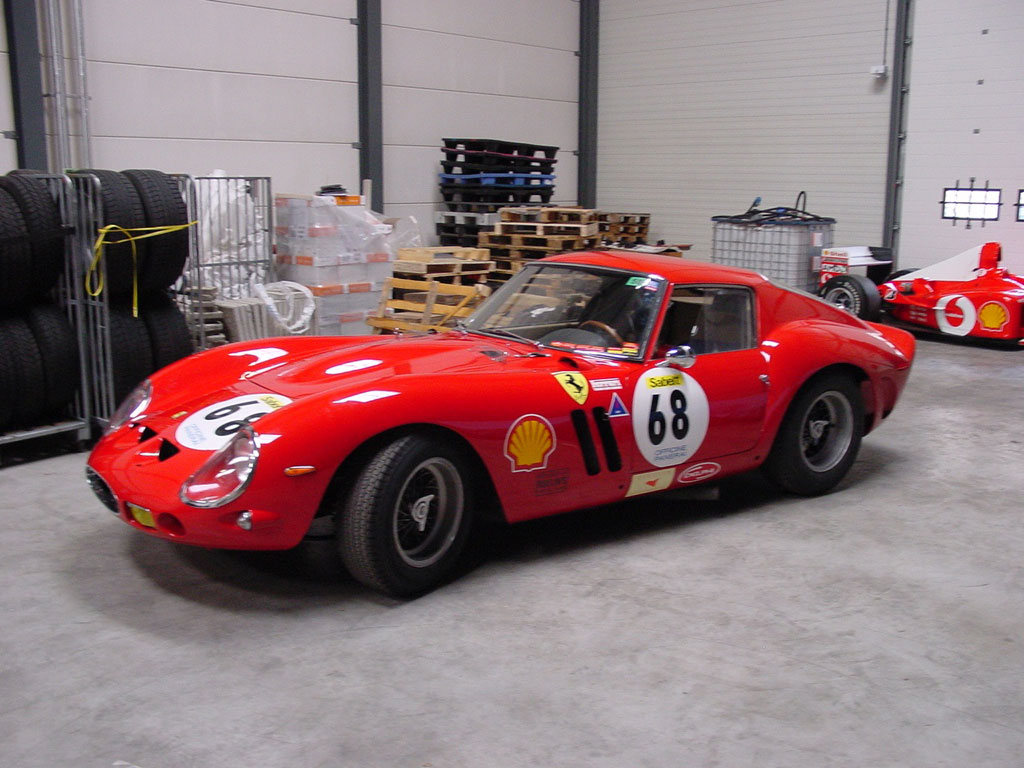
What was once one of the most important collections of vintage and collector Ferraris in the world has been salvaged from bankruptcy wreckage and sold by Hamann Classic Cars of Greenwich, Connecticut. Founded in 1902 by the great grandfather of current Chairman Frits Kroymans, Kroymans was the exclusive Ferrari Distributor in Holland. The $3 billion automobile empire ended in early 2009, when the company filed for bankruptcy.
"We are thrilled to be a part of the salvation of this very important collection of vintage Ferraris," said Thomas Hamann, Owner of Hamann Classic Cars and Chairman of the New York City Concours d'Elegance, who brokered the deal between the European banks and Tom Price, a prominent classic car collector from Northern California.
Experts and collectors agree that this has been the most significant sale of classic Ferraris within the last twenty years. Among the collection recently sold include the following automotive masterpieces:
250 Europa GT 375 America 250 Boano 250 SWB Berlinetta 250 Testarossa 250 GTO 275 GTB/4 Alloy ex N.A.R.T. 330 GTC 365 GTS 365 GTB/4 Daytona Coupe 365 GTB/4 Daytona Spyder 246 GTS Dino Spyder 365 GT4/BB 512 BB 550 Barchetta Enzo 2002 Formula1 Winner of US Grand Prix
This exquisite collection of cars is now coming to the U.S.
About Hamann Classic Cars:
Hamann Classic Cars is one of the leading classic car brokerage houses in the world for specialty collector automobiles. Dedicated to procuring European vintage race and sports cars, Hamann Classic Cars is the world's preeminent source for fine classic European cars specializing in classic Ferraris. www.hamannclassiccars.com
About Thomas Hamann
Thomas Hamann is passionate about cars. For 30 years, he has built an enterprise connecting equally passionate collectors with the vehicles of their dreams. He has become one of the most recognized and established classic car dealers in the world. Specializing in Ferraris, Mr. Hamann is also an authority in all European race and sports cars of the 50s, 60s, 70s and select European pre-war sports and luxury automobiles. He is a consultant to many private collectors, automotive museums, and auction houses. Mr. Hamann assists in managing some of the largest classic car collections in the world. SOURCE: Thomas Hamann Photos:zercustoms
Exhibition Outline of the 80th Geneva International Motor Show
Tokyo, February 5, 2010 - Fuji Heavy Industries Ltd. (FHI), the maker of Subaru automobiles, today announced that it will exhibit the "SUBARU HYBRID TOURER CONCEPT" as an European premiere and unveil the "Subaru Impreza XV" as a world premiere, which will be marketed this summer in Europe, at the 80th Geneva International Motor Show slated for March in Geneva, Switzerland (Press day: March 2 and 3; Open to the public from March 4 through 14). It will also showcase the "Subaru Plug-in STELLA", a production electric vehicle launched in Japan last year, "BOXER DIESEL" models, and highlight Subaru's unique Horizontally-Opposed Boxer Engine technologies. With these exhibits and throughout the booth design, FHI will showcase Subaru's efforts to integrate enjoyable and reliable driving with environmentally friendly solutions. The press conference by President Ikuo Mori is scheduled at the Subaru booth on March 2, 2010 at 15.45h
Employing the Subaru's core technology of "Symmetrical All-Wheel Drive (AWD)" and "Horizontally-Opposed Boxer Engine", the "SUBARU HYBRID TOURER CONCEPT" reflects Subaru's vision of the future grand touring car. Presented with an eye-catching sculpted exterior design, the concept offers an ideal combination of Subaru's authentic driving performance, all-round safety features and environmental friendliness provided by its unique hybrid system.
The "Subaru Impreza XV", developed on the basis of the iconic Impreza 5-door model, offers a new crossover styling. Exclusively designed front grille and wheel arch, and specially equipped roof rails and a roof spoiler accentuate the uniqueness of this special Impreza version. The available 2.0-litre Horizontally-opposed petrol engine and the turbo BOXER DIESEL engine comply with European EURO 5 regulations for enhanced environmental friendliness. Source: Subaru
Japanese tuners Wald are now taking orders for their new kit for the 2010 Lexus LS460 facelift. The car with the styling mods debuted in January at the Tokyo Auto Salon 2010.
Engineers designed a sportier package for the facelifted model than their previous kit. It includes a blacked-out grille ringed in chrome, an aggressive front bumper, and new sidesills. A new diffuser surrounds the dual tailpipes, like the previous Wald kit, but this package has a more squared-off bumper.
The company does not plan to stop here. An e-mail sent to us from the tuner says they are working on a package capable of fitting the LS Hybrid.
Delivery of the Wald Lexus LS460 package will begin in mid-March. The package is also available through select Lexus Japan dealers. More Photos
To celebrate 40 years of the Blue Oval's performance model, Ford launched the limited edition Ford Focus RS WRC Edition. The Ford Focus RS WRC Edition price starts at 55 900 Swiss francs and the company says it will be limited to 50 units.
The unique graphic is the result of a design competition launched in October 2009 between the Swiss importer of the compact Ford rally enthusiasts. The winning proposal, already submitted as a prototype at the IAA in Zurich last November, that was painted white “Frozen White” adhesive side with black / green from design relatively simple and alloy wheels OZ Superturismo GT 19 inches.
The engine remains a turbocharged 2.5-litre from the stock Focus RS worth 300 bhp (305 PS / 224 kW) and 400Nm of torque. 0 - 100km/h sprint time is under 6 seconds and it is capable of posting a 260km/h (162 mph) top speed.
The next generation of the Nissan Patrol luxury SUV will have its world premiere on February 14 at a special event that will be held in the United Arab Emirates. For this purpose, Nissan launched an online competition offering an all expenses paid trip to the event for a total of six lucky winners.
However before you go and apply on the dedicated website, note that only residents of U.A.E., Saudi Arabia. Oman, Kuwait, Bahrain and Qata are eligible to participate in the campaign.
We'll remind you that we first had the chance to see the 2010/2011 Patrol without any camouflage whatsoever in December 2008 through a series of photos that are believed to have been shot during an internal presentation.
Coincidentally, the same thing happened last September with the Nissan Patrol's more luxurious sibling, the 2011 Infiniti QX, which is scheduled to be introduced in North America sometime this year or early 2011.
It is expected that Nissan's Toyota Land Cruiser competitor will be offered with an updated engine range comprising of V6 and V8 petrol units as well as a six-cylinder turbo diesel. Source:carscoop
The year 2010 marks 75 years of the Jaguar name on both road and race cars. As a continuation of this great heritage, Jaguar can confirm it will return to the famed Le Mans 24 hours. With a total of seven wins between 1951 and 1990, Jaguar is the single most successful British make in the race's history. Jaguar will return to Le Mans this year lining up on the starting grid on 12th June 2010 with an XKR GT2 run by JaguarRSR. Paul Gentilozzi, Principal Partner, JaguarRSR commented: "We are delighted the ACO has granted us entry in the prestigious 24 hours of Le Mans. It is a race that is held dearly in the hearts of motorsport fans across the world and for Jaguar to be racing again is something special.
"We are fortunate to bring an international line up of the world's finest driving talent including Scott Pruett and Marc Goossens as our drivers for this race."
Gentilozzi, who will drive the JaguarRSR XKR GT2 in the 2010 American Le Mans Series (ALMS) added: "Spirits will be high around Jaguar's return to Le Mans but we must remember the incredibly high level of competition - a podium place in our category will not fall into our hands. That said, I can guarantee 100 per cent commitment from JaguarRSR and urge fans of Jaguar and Britain's racing heritage to support the team whole heartedly."
C.J. O'Donnell, Global Marketing Director of Jaguar Cars said: "Motorsport has always been important to the Jaguar brand. Our domination of Le Mans in the 1950s was a foundation on which the company was developed. It was twenty years ago that Jaguar last won Le Mans with a TWR Jaguar Sport entry driven by John Nielsen, Price Cobb and Martin Brundle. Returning to Le Mans will reignite excitement for the marque across the globe, all the more poignant in our 75th year.
"With the introduction of the new XK, XF and XJ, the Jaguar brand has advanced cutting-edge technology, stunning design and our 'R' performance driving experience. We now return to motorsport to demonstrate this achievement and the prowess of the Jaguar XKR."
In 1951, the C-type won Le Mans at its first attempt, with a further victory in 1953. The D-type took Le Mans wins in 1955, 1956 and 1957 while this racing success was followed in 1988 with the Jaguar XJR-9LM, a V12-powered Group C car. Another outright victory would follow in 1990 with the Jaguar XJR-12.
ENDS
Details of Jaguar's wins at Le Mans 24-hours:
1951 Model: C-type Race No.: 20 Drivers: Peter Walker, Peter Whitehead Result: 1st Notes (distance and average speeds rounded off to nearest whole figure): First Jaguar win; 2244 miles, 93 mph
1953 Model: C-type Race No.: 18 Drivers: Tony Rolt, Duncan Hamilton Result: 1st Notes (distance and average speeds rounded off to nearest whole figure): Second Jaguar win; 2540 miles, 106 mph
1955 Model: D-type Race No.: 6 Drivers: Mike Hawthorn, Ivor Bueb Result: 1st Notes (distance and average speeds rounded off to nearest whole figure): Third Jaguar win; 2570 miles, 107 mph
1956 Model: D-type Race No.: 4 Drivers: Ron Flockhart, Ninian Sanderson Result: 1st Notes (distance and average speeds rounded off to nearest whole figure): Ecurie Ecosse entry; fourth Jaguar win; 2507 miles, 104 mph
1957 Model: D-type Race No.: 3 Drivers: Ron Flockhart, Ivor Bueb Result: 1st Notes (distance and average speeds rounded off to nearest whole figure): Ecurie Ecosse entry; fifth Jaguar win; 2732 miles, 114 mph
1988 Model: XJR-9LM Race No.: 2 Drivers: Jan Lammers, Johnny Dumfries, Andy Wallace Result: 1st Notes (distance and average speeds rounded off to nearest whole figure): TWR Jaguar Sport entry; sixth Jaguar win; 394 laps, 3313 miles, 138 mph
1990 Model: XJR-12 Race No.: 3 Drivers: John Nielsen, Price Cobb, Martin Brundle Result: 1st Notes (distance and average speeds rounded off to nearest whole figure): TWR Jaguar Sport entry; seventh Jaguar win; 359 laps, 3034 miles, 127 mph More Photos
Lamborghini has released a new video to support their "Ad Personam" program. The plan, which translates from Latin as "To the person," offers customers the opportunity to select from a variety of exclusive options.
The options include an extensive variety of choice in exterior color, leather tone, and stitching hue. As the video points out, one thing that will not be changed is Sant'Agata, Bolognese, where each hand built Lamborghini is still assembled.
Lamborghini makes Ad Personam available, for a fee, to those customers who need an extra level of exclusivity. Launched at NAIAS in 2008, the only limiting factor to the options is the customer's available cash.


![[2010-Renault-Megane-CC]](http://3.bp.blogspot.com/_FoXyvaPSnVk/S2wvBhLqsGI/AAAAAAACeYo/tkQQOT990CE/s1600/2010-Renault-Megane-CC-15.jpg)
![[2010-Renault-Megane-CC]](http://3.bp.blogspot.com/_FoXyvaPSnVk/S2wvAnSGRSI/AAAAAAACeYQ/EA7wSKHzAt8/s1600/2010-Renault-Megane-CC-12.jpg)
![[2010-Renault-Megane-CC]](http://4.bp.blogspot.com/_FoXyvaPSnVk/S2wvBZRsl1I/AAAAAAACeYg/cj6kVLLmcGc/s1600/2010-Renault-Megane-CC-14.jpg)
![[2010-Renault-Megane-CC]](http://1.bp.blogspot.com/_FoXyvaPSnVk/S2wvAotIP1I/AAAAAAACeYI/cb4X1ZHjtpc/s1600/2010-Renault-Megane-CC-11.jpg)
![[2010-Renault-Megane-CC]](http://2.bp.blogspot.com/_FoXyvaPSnVk/S2wvA6EQv7I/AAAAAAACeYY/fCRvmXP2mtY/s1600/2010-Renault-Megane-CC-13.jpg)
![[2010-Renault-Megane-CC]](http://3.bp.blogspot.com/_FoXyvaPSnVk/S2wvARZnB5I/AAAAAAACeYA/KAleO0P9i9M/s1600/2010-Renault-Megane-CC-10.jpg)




 Posts
Posts



